





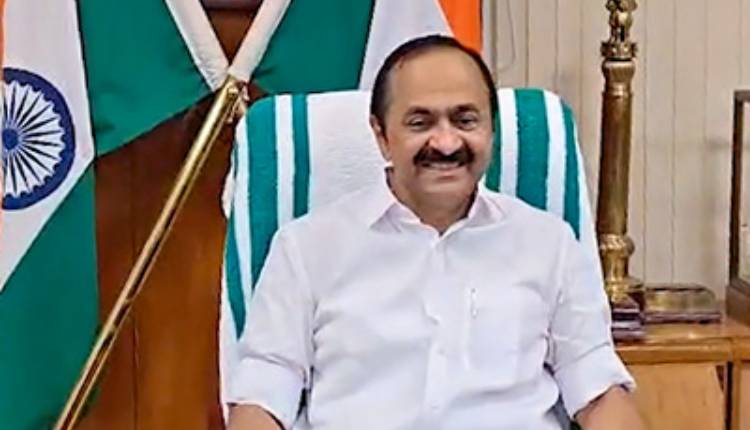
Thiruvananthapuram; Barely a day after V.D. Satheesan assumed office as the Chief Minister, the reopening of the North Gate of the Kerala Secretariat in Thiruvananthapuram has emerged as one of the most politically-loaded images of the new regime.
This is a deliberate attempt by the new United Democratic Front government to draw a sharp contrast with the decade-long rule of former Chief Minister, Pinarayi Vijayan.
For years, the Left government projected itself as an administration that understood the ‘felt needs’ of ordinary people and governed with a pro-people approach.
However, critics repeatedly argued that the reality on the ground stood in stark contrast to that narrative.
Unlike his predecessor Oommen Chandy, widely remembered for his accessibility and constant interaction with the public, Pinarayi Vijayan increasingly came to be viewed as a heavily shielded leader moving with extraordinary security cover and layers of administrative insulation.
Nothing perhaps symbolised that perception more than the transformation of the Secretariat itself during the Left era.
The North Gate, historically known as the ‘protest gate’, gradually became inaccessible amid heightened barricading and security restrictions.
Opposition parties often accused the previous government of turning the Secretariat into a fortress where even journalists found access difficult, let alone ordinary citizens seeking to approach the administration.
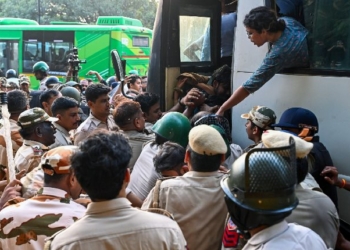
Against that backdrop, the dramatic decision by Congress-backed organisations to reopen the gate within hours of the new government taking charge, was far more than an administrative development.
It was political theatre loaded with messaging.
As barricades were physically moved aside and the gates thrown open, Congress affiliated leaders declared that Kerala had regained its freedom.
Some went further, alleging that the Secretariat under the previous regime had resembled a ‘Ravana fort’, shut off from the people it was meant to serve.
The symbolism was impossible to miss.
The reopening was projected not merely as restoration of an entrance, but as reopening the doors of governance itself.
Leaders associated with the move said the new Satheesan administration would not function through distance and intimidation, but through accessibility and public engagement.
Public entry through the gate is expected to resume in phases, with employees’ organisations calling it the first visible sign of a government trying to dismantle the political culture of barricades, controlled access and fear that had come to define the previous era.
(IANS)