





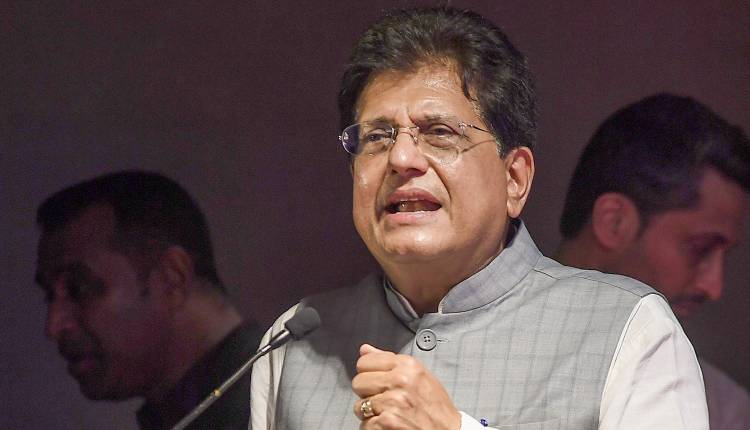
New Delhi: Union Commerce and Industry Minister Piyush Goyal on Friday described the launch of India’s first indigenous hydrogen-powered train as a truly historic moment for the country’s green mobility journey, saying it marks a major step towards a cleaner and more self-reliant transport ecosystem.
In a post on X, the minister said Prime Minister Narendra Modi will flag off the country’s first indigenous hydrogen-powered train on the Jind-Sonipat route in Haryana.
Powered by a 1,200 kW hydrogen fuel cell propulsion system, the 10-coach train emits only water vapour, making it a near-zero emission mode of transport, Goyal said.
He added that the launch marks a significant milestone in the country’s journey towards Aatmanirbhar Bharat and reflects the government’s commitment to innovation-led, sustainable growth.
According to the minister, the project is backed by indigenous hydrogen storage and refuelling infrastructure developed at Jind, enabling India to join a select group of countries pioneering hydrogen-powered rail transport.
The train will initially operate on the 89-km Jind-Sonipat section of Northern Railway.
Unlike conventional diesel or electric trains, the hydrogen-powered train generates electricity onboard through a Proton Exchange Membrane (PEM) fuel cell. Hydrogen stored in onboard cylinders reacts with oxygen from the atmosphere inside the fuel cell to generate electricity for the train’s traction motors. The only by-products of the process are water vapour and heat.
The train consists of two hydrogen driving power cars and eight trailer coaches, with each power car producing 1,200 kW of power. Designed to carry around 2,600 passengers, it can run at a maximum speed of 110 kmph, making it one of the largest hydrogen-powered passenger trainsets developed globally.
To support operations, Indian Railways has established the country’s first integrated railway hydrogen ecosystem at Jind, where hydrogen is produced through electrolysis, compressed for storage and supplied through dedicated refuelling infrastructure.
The project also incorporates multiple safety systems, including hydrogen leak detectors, flame, heat and smoke sensors, continuous ventilation, and automatic shutdown mechanisms. According to the Ministry of Railways, the system complies with international safety standards and statutory requirements prescribed by the Petroleum and Explosives Safety Organisation (PESO).
The hydrogen train is part of Indian Railways’ broader green transition strategy after electrifying more than 99 per cent of the country’s broad gauge network. It also supports India’s National Green Hydrogen Mission and long-term net-zero goals.
(IANS)