
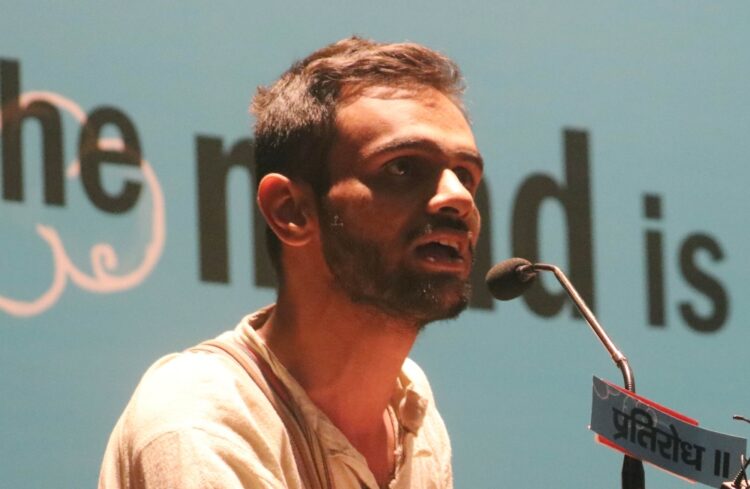
New Delhi: The Supreme Court has dismissed a review petition filed by student activist Umar Khalid challenging its January 5 judgment that had denied him bail in the alleged larger conspiracy case linked to the 2020 Delhi riots.
After considering the material placed on record, a Bench of Justices Aravind Kumar and N. V. Anjaria rejected the plea, observing that no valid ground for review was made out.
“Having gone through the review petition and also the documents enclosed, we do not find any good ground and reason to review the judgment dated 05.01.2026. Accordingly, the review petition is dismissed,” the Justice Kumar-led Bench said.
The top court also declined the request for an oral hearing of the review plea, stating: “Prayer for oral hearing in the review petition is rejected.”
Earlier, on April 13, senior advocate Kapil Sibal, appearing for Khalid, had mentioned the matter before the Justice Kumar-led Bench, urging that the review petition be heard in open court.
“I wanted to make a mention, my lords are hearing the review petition in Umar Khalid’s case. It is listed on Wednesday, I believe. My request is, it is only for your consideration if you could have it in an open court,” Sibal had submitted.
The Justice Kumar-led Bench had responded that it would examine the request, stating, “We will look into the paper, and if required, we will call it.”
Ordinarily, review petitions are decided in chambers on limited grounds, such as errors apparent on the face of the record, and are rarely listed for open court hearing.
In January this year, the Supreme Court refused to grant bail to Khalid and co-accused Sharjeel Imam in the alleged larger conspiracy case arising out of the 2020 Delhi riots.
However, the apex court granted bail to five other accused — Gulfisha Fatima, Meeran Haider, Shifa Ur Rehman, Mohd Saleem Khan and Shadab Ahmed — while declining relief to Imam and Khalid.
Pronouncing the verdict, the Justice Kumar-led Bench had held that the prosecution material disclosed a prima facie case against the duo, attracting the statutory bar on bail under Section 43D(5) of the Unlawful Activities (Prevention) Act.
The apex court had observed that the prosecution material and evidence on record did not justify Khalid’s release on bail and indicated his involvement at the level of planning, mobilisation and issuance of strategic directions.
Rejecting the contention that no overt act of violence was attributed to Khalid, the top court had said that in conspiracy cases, “the law does not demand that every conspirator execute the terminal act, but demands a prima facie nexus between the accused and the unlawful design to be inferred from cumulative conduct.”
The Supreme Court had clarified that its observations were confined to the question of bail and would not influence the trial.
(IANS)