





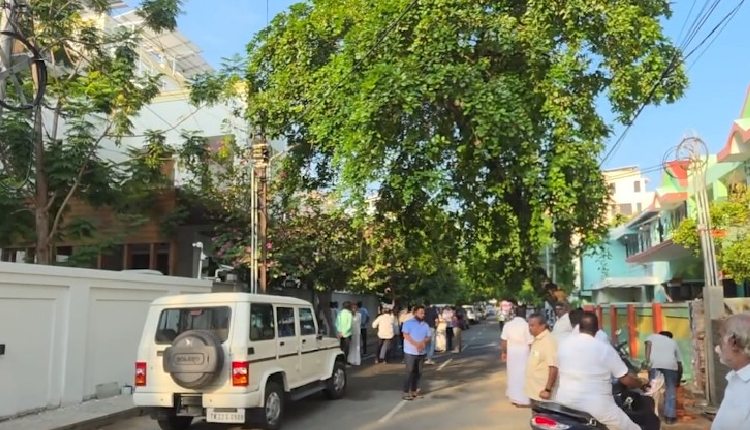
Tiruchi: Directorate of Vigilance and Anti-Corruption (DVAC) officials conducted fresh searches at premises linked to former Tamil Nadu minister K.N. Nehru on Thursday, amid investigations into allegations of large-scale corruption in recruitment to the Municipal Administration and Water Supply Department.
According to preliminary information, officials searched his residences in Tiruchirappalli and Chennai, along with other properties linked to him.
DMK functionaries and supporters gathered outside his Tiruchirappalli residence after learning about the operation.
The latest searches follow the Madras High Court’s October 26 dismissal of Nehru’s petition seeking a review of its earlier direction to register a case based on material supplied by the Enforcement Directorate (ED).
The court’s original direction was issued on February 20, and the DVAC subsequently registered a case in June.
The recruitment investigation concerns allegations that approximately Rs 634 crore was collected as bribes for appointments to 2,538 posts during the previous DMK government.
Nehru headed the Municipal Administration and Water Supply Department during that period. The ED alleged that candidates were asked to pay between Rs 25 lakh and Rs 35 lakh for government appointments. Its material reportedly included digital communications, recruitment documents and selection-related records recovered during an investigation involving premises linked to Nehru’s brother.
These allegations remain subject to investigation. Thursday’s operation comes after extensive DVAC searches on September 5 at properties linked to Nehru, his relatives and others. Those searches covered 30 locations across Tiruchirappalli, Chennai, Coimbatore, Tiruppur and Erode. The September operation concerned a separate investigation into alleged irregularities in departmental contracts.
The ED had alleged that at least Rs 1,020 crore was collected through bribes and commissions linked to tender manipulation. The DVAC subsequently reported seizing 241 documents and electronic evidence.
Following those searches in September, Nehru had denied wrongdoing, described the action as a political vendetta and said he would contest the case legally. DMK president M.K. Stalin had also condemned the operation as politically motivated and questioned its timing during the Assembly session.
The High Court has clarified that directing registration of a case does not amount to a finding of guilt. Investigators must examine the material and determine whether offences occurred and who, if anyone, was responsible. Nehru has also approached the Supreme Court challenging the High Court’s direction, adding a further legal dimension to the continuing investigation.
(IANS)