


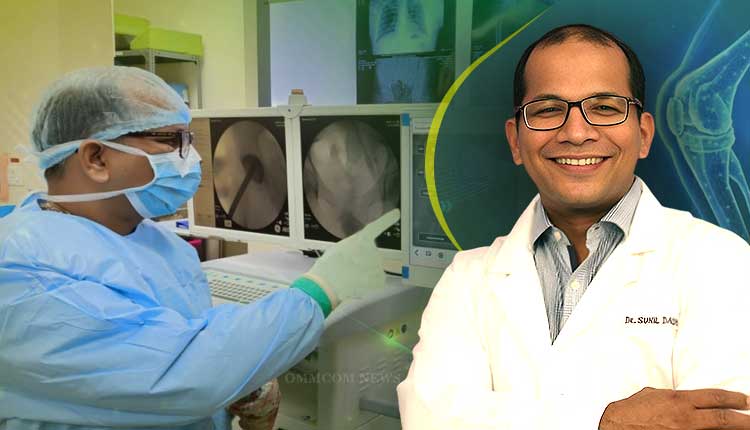
Bhubaneswar: Renowned orthopaedic expert Dr. Sunil Kumar Dash has highlighted a remarkable evolution in the field of orthopaedics over the past few decades. What once focused primarily on restoring mobility for patients with end-stage arthritis has now transformed into a highly precise, technology-driven medical discipline.
The goal is no longer just pain relief, but achieving accuracy, longevity, and rapid recovery for patients. Speaking on the advancements in joint replacement surgery, Dr. Dash said, “We have entered the era of precision orthopaedics, where robotic assistance and computer navigation are redefining the global standards of care. When technology blends with experience, that is true precision.”
In the past, joint replacement surgeries depended heavily on the surgeon’s experience, anatomical landmarks, and mechanical jigs. While these traditional methods delivered good results, they often involved variables in implant positioning, which could impact soft-tissue balance and long-term outcomes.
Today, modern joint replacement has eliminated much of that guesswork through personalized alignment and reproducibility. By adopting advanced navigation and robotic technologies, surgeons can now make data-driven decisions even before making the first incision.
Dr. Dash particularly emphasized the game-changing impact of robotics in knee arthroplasty, including Total Knee Replacement (TKR) and Partial Knee Replacement (UKR). “In Total Knee Replacement, we use pre-operative imaging or intra-operative mapping to create a 3D model of the patient’s specific anatomy,” he explained.
“The robotic arm then allows execution of the surgical plan with sub-millimetric accuracy. This precision protects surrounding soft tissues and ensures optimal ligament balance throughout the full range of motion, resulting in a knee that feels more natural to the patient.”
He added that such technological integration leads to better implant positioning, reduced complications, faster recovery, and improved patient satisfaction. Patients often experience less post-operative pain and can return to their daily activities much sooner compared to conventional techniques.
Dr. Dash believes that the fusion of cutting-edge technology with a surgeon’s clinical expertise represents the future of orthopaedics. As these tools become more accessible, more patients across India are expected to benefit from safer, more predictable, and longer-lasting joint replacement outcomes.