





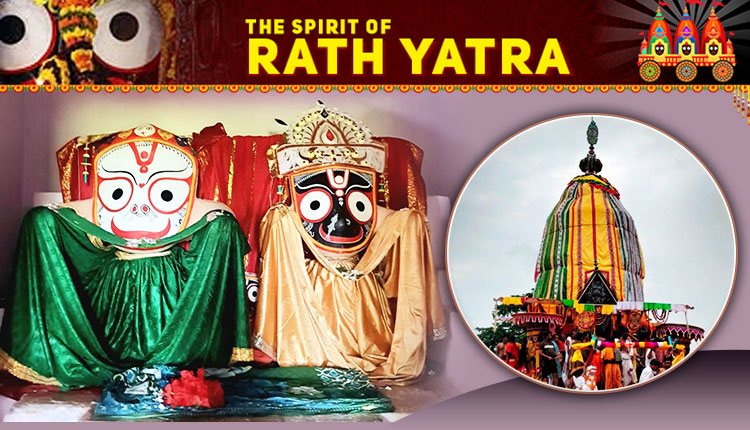
Have you ever heard of a Jagannath temple without the Trinity? It sounds almost unthinkable. Across India and even the world, we find Jagannath temples where Lord Jagannath, Lord Balabhadra and Devi Subhadra sit together on the Ratna Singhasan. Their togetherness feels complete. Without the trio, Rath Yatra feels incomplete, the chants feel incomplete, the very name ‘Jagannath’ feels incomplete.
In general, even when we speak of the sibling deities, our tongue automatically completes the circle — Jagannath, Balabhadra and Subhadra. Say one name and the other two follow, like a prayer. To leave one out feels like an unfinished sentence, like a song missing its last note, like a family portrait with an empty space. For millions of devotees, the Trinity is not three separate idols. It is one story, one journey, one Rath. Without Subhadra between her two brothers, the chariot feels lighter, the chants feel quieter, and the darshan feels incomplete.
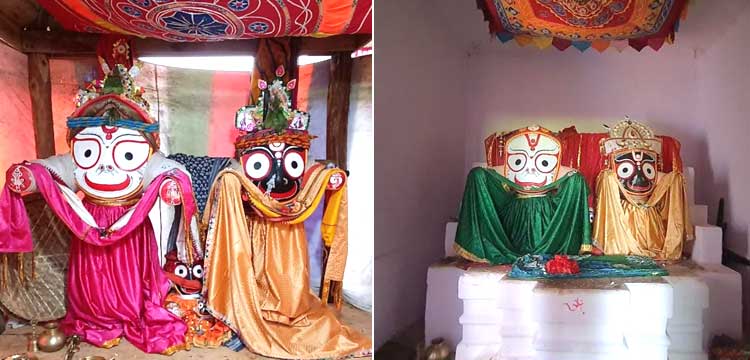
Yet, in a quiet village at the foothills of the famous Shaiva shrine Kapilash, there is a 16th-century Jagannath temple where Devi Subhadra is not worshipped. Not in daily rituals. Not even on Rath Yatra. Only two chariots roll down the road here. Only two deities go to meet their aunt. On the occasion of Rath Yatra, Ommcom News takes you to Deogaon village under Gandia block in Dhenkanal district — home to one of Odisha’s most ancient and heritage-rich Jagannath peethas, and also one of its rarest. In most places, Rath Yatra is about togetherness. In Deogaon, it is also about remembrance.
The 16th Century Shrine At The Foot Of Kapilash
At the foot of Kapilash in Dhenkanal district’s Gandia block lies Deogaon village. Here stands the centuries-old, heritage-rich temple of Mahaprabhu Shri Jagannath, believed to have been built in the 16th century during the reign of King Prataparudra Dev. The Rath Yatra held here is equally ancient. But what makes this peetha unique is a striking exception — Devi Subhadra is neither worshipped here, nor does she travel on the chariot.
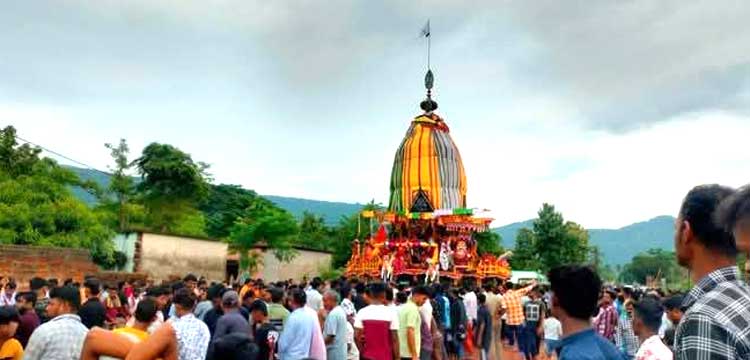
During Rath Yatra, only Mahaprabhu Shri Jagannath and His elder Brother ascend the chariot and proceed to the Mausima Temple. The trio is reduced to a duo.
The Story Behind The Missing Goddess
How did this happen? The answer lies in a painful chapter of the temple’s history. According to noted researcher Padma Shri Pandit Antyaryami Mishra, many years ago the priest who used to worship Devi Subhadra at Deogaon lost his entire lineage. With no one left to in his family, the priest placed Subhadra’s idol inside a room within the temple premises and left her there. Since that day, no one has worshipped Devi Subhadra at this temple.
District Shri Jagannath Seva Parishad President Prasad Rath echoes the same account. He said the Jagannath temple at Deogaon was built in the 16th century by Prataparudra Dev. The temple’s Mukhashala is unusually large compared to the main shrine.
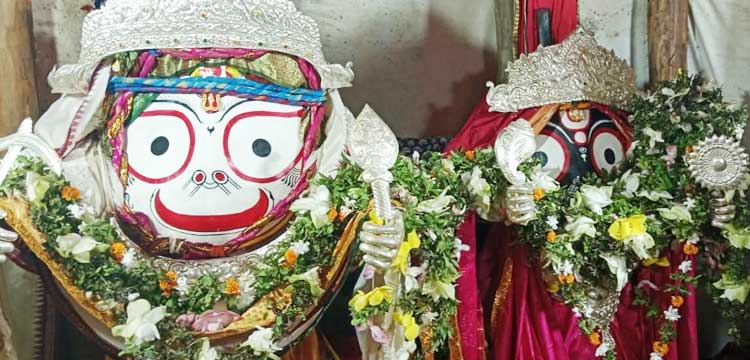
“Many years ago, the priest who served Subhadra had no heirs left in his family. As a result, the priest placed Subhadra facing down in a room. From that day onwards, only Mahaprabhu Jagannath and Balabhadra are worshipped at Deogaon temple. And during Rath Yatra too, only the two of them go to Shri Gundicha Temple,” he said. To this day, Subhadra’s idol remains in that locked room, untouched by daily rituals, untouched by the chants of Rath Yatra.
Imagine the Grand Road of Puri — three massive chariots, three deities, lakhs of voices pulling together. Now imagine Deogaon — a chariot moving through narrow village lanes, with the same devotion but a quiet absence in the middle.
Elderly villagers say people here have grown up seeing only Jagannath and Balabhadra being worshipped atop the temple. The rituals follow the same ancient order — Mangala Alati, Abakasha and the pulling of the chariots.
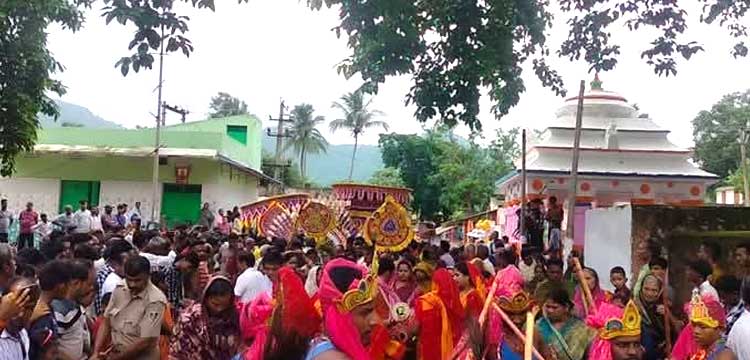
Does the absence of Subhadra make the faith any less? The servitors and villagers don’t think so. For them, Jagannath and Balabhadra carry the prayers of the entire village. The temple still draws devotees from nearby areas, especially during Rath Yatra and other festivals.
The story of Subhadra at Deogaon is not just about an idol in a locked room. It is about a lineage that ended, a duty that could not be carried forward, and a community that chose to continue worship despite the void.
By Rashmi Rekha Das