





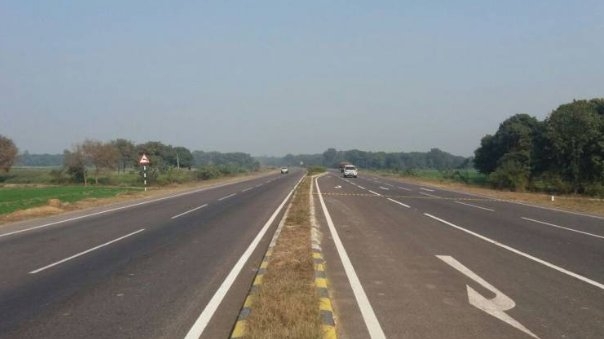
Bhubaneswar: The National Highways Authority of India (NHAI) has received an overwhelming response from bidders for the construction of the 160 km long access-controlled greenfield Coastal National Highway from Rameshwar to Paradip in Odisha.
Bids were invited by NHAI for construction of the project in two packages and both packages received encouraging participation. The 79.4 km long 4-lane access-controlled Rameshwar to Konark Package-I received 10 bids, and the 80.7 km long 2-lane with paved shoulder Konark to Paradip Package-II received seven bids, reflecting robust competition and keen interest. The project will be awarded on Hybrid Annuity Mode (HAM).
The Rameshwar to Paradip coastal highway project was approved by the Cabinet Committee on Economic Affairs in June 2026 with a combined total capital cost of Rs 8,300.79 crore. During construction, the project is expected to generate 53.6 lakh direct man-days and 67 lakh indirect man-days of employment. With a design speed of 100 km per hour, the project will provide direct and fast connectivity to key tourist places like Shree Jagannath Temple, Puri Beach and Konark Sun Temple and help reduce travel time between Rameshwar and Paradip by about 2 hours and 30 minutes.
The Rameshwar-Paradip section will offer an alternate route for NH-16 and NH-316 and improve connectivity to Puri, Konark, Paradip Port, upcoming Puri International Airport, facilitate smooth transportation to developing ports like Astarang and Subarnarekha as well as provide connectivity to Khurda, Puri, Kendrapada and Jagatsinghpur districts.
The existing NH-16 is part of the Golden Quadrilateral and passes through major towns of Khordha, Bhubaneswar and Cuttack, while NH-316 connects Bhubaneswar to Puri and further extends towards Satapada and Konark. The current sections along Puri-Satapada and Puri-Konark stretches have nearly 40 percent ribbon development along the corridor with high local commuter traffic, making it unsuitable for high-speed long-distance movement.
The new corridor will provide faster access-controlled connectivity, reduce fuel consumption, carbon emissions and vehicle operating costs, while lowering logistics costs and supporting economic growth across the region.