






Raurkela: Researchers at the National Institute of Technology (NIT) Raurkela have secured a patent for an innovative composite manufacturing technology that significantly enhances the strength and durability of Fibre-Reinforced Polymer (FRP) composites. The breakthrough is expected to benefit high-performance engineering sectors, including aerospace, defence, automotive, renewable energy, and marine engineering.
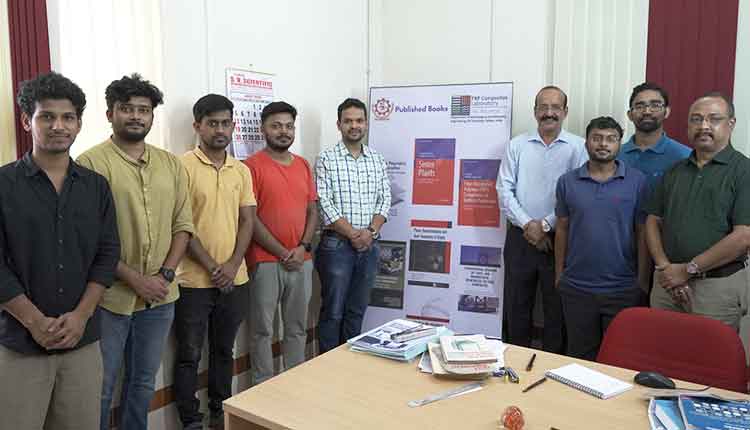
The patented technology has been developed by the FRP Composite Laboratory of the Department of Metallurgical and Materials Engineering at NIT Raurkela by a research team comprising Dr. Rajesh Kumar Prusty, Assistant Professor; Prof. Bankim Chandra Ray, Professor; Mr. Parimal Jana, Research Scholar; and Dr. Dinesh Kumar Rathore of the Department of Mechanical Engineering, MNIT Jaipur.
FRP composites are widely used in aircraft, defence platforms, space launch vehicles, wind turbines, high-speed rail systems, and hydrogen storage tanks due to their high strength-to-weight ratio and corrosion resistance.
However, these materials often develop cracks and internal layer separation under heavy mechanical loading, affecting their long-term performance.
To address this challenge, the researchers have developed a three-dimensional reinforced hybrid composite by incorporating graphene nanoplatelets into glass fibre-reinforced epoxy composites. During the manufacturing process, the graphene nanoplatelets are aligned through the thickness of the composite using a conventional 50 Hz AC electric field at 800 volts during the curing stage. The modification requires only a minor change to existing manufacturing methods, making the technology suitable for industrial-scale adoption.
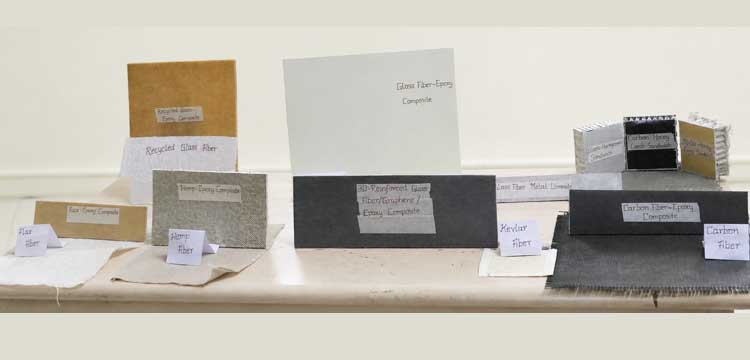
According to Dr. Rajesh Kumar Prusty, the innovation can be applied in manufacturing aircraft panels, automotive crash structures, wind turbine blades, pressure vessels, marine structures, and other advanced engineering components where lightweight yet damage-resistant materials are essential.
Laboratory tests conducted in accordance with ASTM standards demonstrated remarkable improvements in the mechanical properties of the developed composites. The material recorded a 37 per cent increase in tensile strength, 30 per cent improvement in flexural strength, 63 per cent increase in flexural modulus, 26 per cent improvement in tensile modulus, 24 per cent increase in interlaminar shear strength, 33 per cent improvement in Mode-I fracture toughness, 53 per cent increase in Mode-II fracture toughness, and 55 per cent higher storage modulus at 40°C.
Highlighting the significance of the innovation, Prof. Bankim Chandra Ray said the technology has the potential to reduce maintenance costs, improve energy efficiency, and promote sustainable manufacturing by producing lighter and more durable composite materials. He added that the innovation would also contribute to India’s Atmanirbhar Bharat initiative in the field of advanced materials.
The research team now plans to evaluate the material in larger structural components and study its long-term environmental durability. Efforts are also underway to facilitate technology licensing and collaborate with industries for commercialisation of the patented technology.