





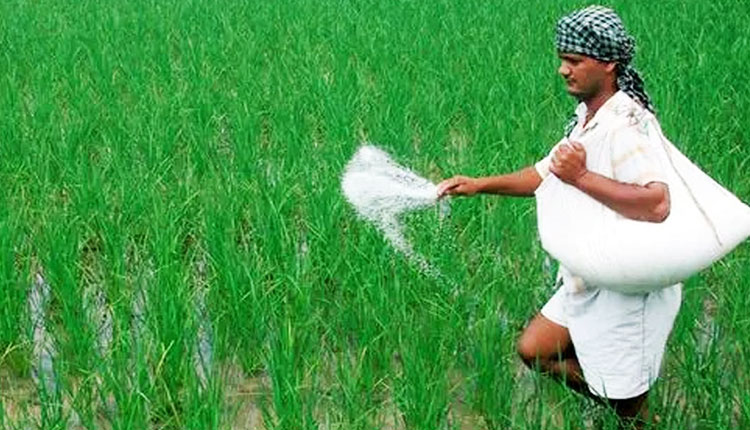
Bhubaneswar: In a significant policy initiative aimed at ensuring the timely availability of fertilisers to farmers and curbing black marketing, the Odisha Government has approved a new Rs 42-crore Interest Subvention Scheme for cooperative societies engaged in fertiliser distribution. The scheme, titled “Interest Subvention on Cash Credit Loan for Prepositioning of Fertiliser,” has been approved by the Finance Department following the recommendation of the Standing Finance Committee (SFC) under the Department of Cooperation.
The initiative seeks to address one of the major challenges faced by Primary Agricultural Cooperative Societies (PACS) and Large-sized Adivasi Multipurpose Cooperative Societies (LAMPCS), which often incur substantial interest costs while procuring and stocking fertilisers well before the commencement of the Kharif and Rabi seasons. Such advance stocking is essential to ensure an uninterrupted supply of fertilisers to farmers during periods of peak demand.
Under the new scheme, the State Government will provide 100 per cent interest subvention on Cash Credit (CC) loans availed by eligible cooperative societies for the prepositioning of fertilisers. By eliminating interest costs, the government aims to strengthen the financial capacity of these cooperatives and encourage them to maintain adequate fertiliser stocks ahead of the cropping seasons.
The scheme also reflects the State Government’s broader strategy to expand the role of cooperatives in agricultural input distribution. At present, cooperative institutions account for nearly 25–30 per cent of fertiliser distribution in Odisha. Through this intervention, the government intends to increase their market share to 60 per cent from the Kharif season of 2026, thereby reducing dependence on private traders and minimising the scope for illegal diversion and black marketing.
The government has approved a financial outlay of Rs 42 crore for the five-year period from 2026–27 to 2030–31, with an initial allocation of Rs 5 crore for the current financial year. Around 2,700 grassroots cooperative societies, including PACS and LAMPCS across the State, are expected to benefit from the programme. Each society will be eligible for Cash Credit limits of up to Rs 10 lakh, depending on its operational capacity and business requirements.
In addition to financial support, the scheme emphasises greater transparency in fertiliser sales. The Department of Cooperation will encourage the adoption of QR code-based digital payment systems at cooperative outlets to facilitate cashless transactions and improve accountability at the point of sale.
The initiative is expected to significantly improve the efficiency of fertiliser distribution by enabling cooperatives to stock essential agricultural inputs in advance without the burden of interest payments. The timely availability of fertilisers at government-notified prices is expected to enhance agricultural productivity while safeguarding the interests of farmers.
With this farmer-centric intervention, the Odisha Government has reaffirmed its commitment to strengthening the cooperative sector as a key pillar of agricultural development. By combining financial assistance with digital reforms, the scheme is expected to create a more transparent, efficient, and farmer-friendly fertiliser distribution system across the State.