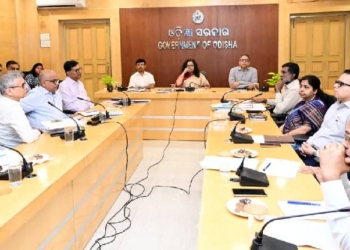






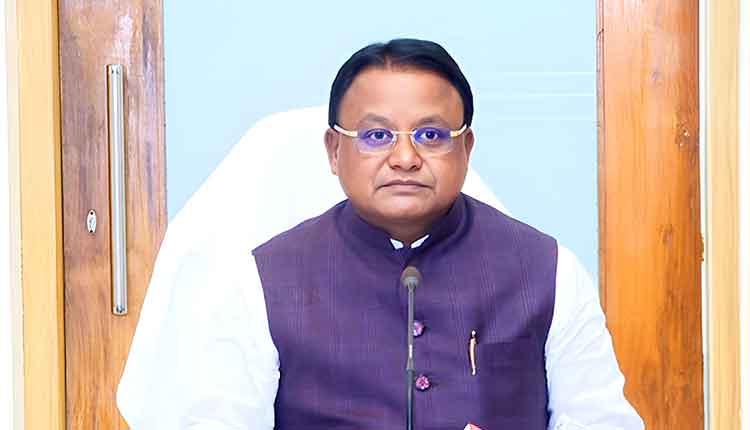
Bhubaneswar: Odisha’s economy is predominantly agricultural, so our government is giving top priority to water security and irrigation development, said Chief Minister Mohan Charan Majhi.
Addressing a departmental summit organized by the Union Ministry of Jal Shakti in New Delhi, the Chief Minister said Rs 54,000 crore worth of water infrastructure work has been sanctioned in the state in the last two years and 3,20,000 hectares of agricultural land has been provided with irrigation facilities in a very short period of time.
Prime Minister Narendra Modi, Union Minister of Jal Shakti C R Patil, Chhattisgarh Chief Minister Vishnu Deo Sai, along with Water Resources Ministers and senior officials of various states were present at the summit.
Presenting the state’s achievements in water conservation, groundwater management and infrastructure development, CM Majhi said 770 new check dams and 9 in-stream storage structures (ISS) have been completed while 1,312 old check dams have been rehabilitated. In addition, one dam, one barrage, 2 underground pipeline distribution networks, 6 mega lifts and 32 minor irrigation projects have been completed.
Work on 14 more ISS projects and 6 medium irrigation projects will be started in the coming year. Currently, work on 5 new major and medium, 58 mega lifts and 5 new minor irrigation projects is progressing at a fast pace. To support rural and agricultural sectors, 3,224 community lift irrigation, 20,228 deep borewells and 8,917 solar deep borewells have been constructed. To maintain groundwater sustainability, 20,000 rooftop rainwater harvesting structures have been completed under ‘Chhata’ Yojana and 1,200 recharge wells under ‘Arua’ Yojana. More than 40,000 ‘Pani Panchayats’ are being empowered, he said.
The Chief Minister noted that Odisha has already been declared the ‘Best State’ in the 5th National Water Awards for these initiatives. He specially mentioned the successful completion of the much-awaited Kanupur Project.
The project, which was stalled since 2003-04, has been resolved by shifting the shrine of local Goddess Maa Shalabani Devi, coordination with NHAI and construction of plastic cut-off walls with technical assistance from CWC and IIT Roorkee. The dam work will be completed by August 31, and the canal network will be completed by next year, providing irrigation to 25,000 hectares, he added.