





Bhubaneswar: Odisha has intensified its fight against malnutrition, with the state government putting 18 districts on priority and bringing 23,088 Anganwadi centres under the Odisha Poshan Mission (OPM). The government has also laid emphasis on digital monitoring, early detection of malnutrition and strengthening Anganwadi infrastructure to improve the nutritional status of mothers and children.
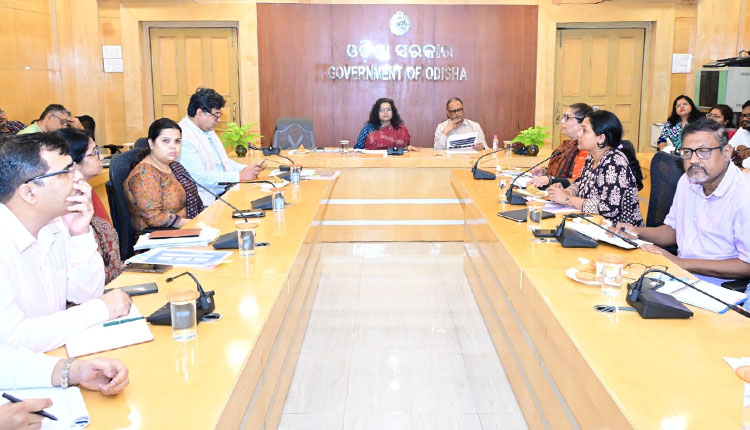
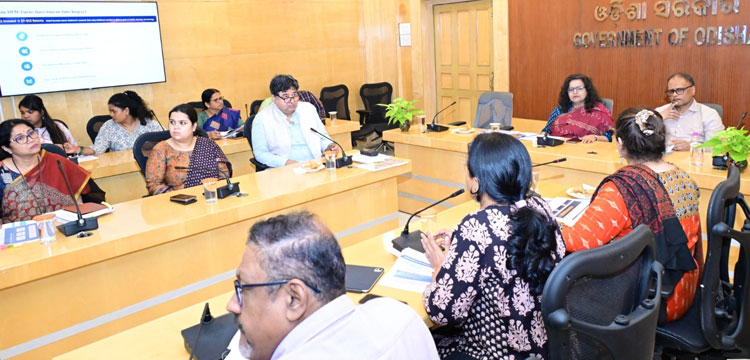
A high-level meeting on the implementation and strategy of the OPM was held at Lok Seva Bhawan on Saturday under the chairmanship of Chief Secretary Anu Garg.
The Chief Secretary stressed the need for a mission-mode approach to eliminate malnutrition in the state and directed officials to strengthen service delivery through digital monitoring. She also emphasised completing incomplete Anganwadi buildings under the ‘Samruddha Anganwadi Yojana’, constructing new centres wherever required and improving existing infrastructure to create safe and child-friendly spaces for children.
State Development Commissioner and Additional Chief Secretary Deoranjan Kumar Singh, Principal Secretary of the Finance Department Sanjeeb Kumar Mishra, Principal Secretary of the Women and Child Development Department Dr Mrinalini Darswal, Director Monisha Banerjee and senior officials of various departments were present at the meeting.
Officials discussed implementing the Odisha Poshan Mission as a mission-mode mechanism for the ‘Mukhyamantri Sampoorna Pushti Yojana’, particularly in districts identified as having a high burden of malnutrition.
As part of the mission, 23,088 Anganwadi centres have been covered. These include centres under 100 priority ICDS projects in the identified districts, 22,707 Anganwadi centres identified as underperforming on the basis of the Poshan Index and 159 ‘Gramoday’ Anganwadi centres located in Maoist-affected areas.
The initiative will also cover identified Particularly Vulnerable Tribal Groups (PVTGs) in the state.
The 18 districts identified under the Poshan scheme are Angul, Deogarh, Dhenkanal, Gajapati, Ganjam, Jajpur, Jharsuguda, Kalahandi, Kandhamal, Keonjhar, Koraput, Malkangiri, Mayurbhanj, Nuapada, Rayagada, Nabarangpur, Sambalpur and Sundargarh. Nine aspirational districts identified by NITI Aayog will also be included in the programme.
The mission will focus on nine strategic pillars — early detection, support, education, nutrition, nutrition awareness, practical awareness, analysis, evaluation and improvement — with the objective of detecting malnutrition early and ensuring timely intervention.
Digital and data-driven monitoring of children’s nutritional status will be strengthened through the Nutrition Tracker. Special focus will be placed on the first 1,000 days of a child’s life, low birth weight and child nutrition.
The ‘Suposhit Odisha Mission’ will also seek to reduce severe underweight and stunting among children at the Anganwadi level.
The programme will focus on ensuring the availability of nutritious food, tackling micronutrient deficiencies, food fortification, nutrition awareness and community participation. Additional nutritional support will be provided to pregnant and lactating women and adolescents, while severely malnourished children will receive special nutritional assistance.
The state also plans to strengthen monitoring and quality evaluation of nutrition programmes through geo-tagged Anganwadi visits, live dashboards, independent evaluation and food-quality testing.
The proposed outlay for the Odisha Nutrition Mission for 2026-27 and 2027-28 is Rs 360.68 crore. The funds will be utilised for nutritious food, performance incentives, awareness programmes, monitoring, nutrition surveys, food-quality testing and micronutrient-related activities.
The meeting also reviewed the construction of new Anganwadi centres and completion of incomplete centres under the ‘Samruddha Anganwadi Yojana’.
Though a five-year budget has been provided for the period from 2026-27 to 2030-31, officials were directed to complete incomplete Anganwadi centres at the earliest. Fencing will be taken up in the next phase to improve the safety and security of the centres.
The government has also directed officials to construct new Anganwadi centres near public settlements wherever required so that children can easily access the nearest centre.
With digital tracking, targeted interventions and infrastructure upgrades forming key components of the programme, the state aims to strengthen its efforts to improve nutrition outcomes among children, mothers and adolescents.