


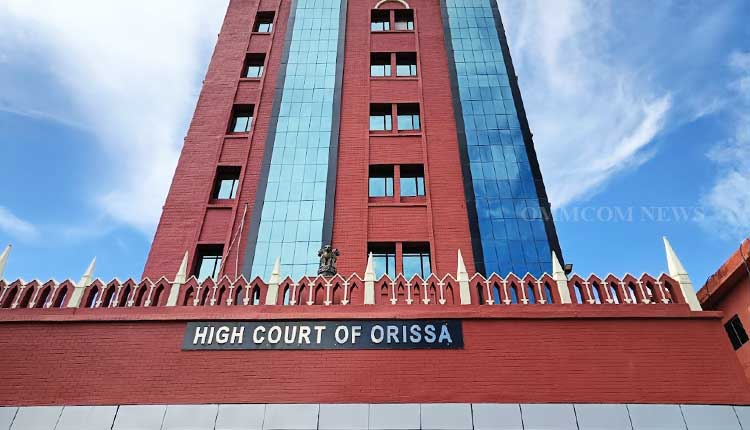
Cuttack: The Orissa High Court on Tuesday sought a response from the state government on its controversial decision to deny petrol and diesel to vehicles without a valid pollution-under-control certificate (PUCC), and issued notice to the Transport Commissioner-cum-Chairman of the State Transport Authority (STA).
A division bench comprising Chief Justice Harish Tandon and Justice M S Raman directed the authority to file an affidavit within 15 days explaining its stand on the December 20, 2025 notification. The matter has been posted for further hearing after three weeks.
The court was hearing a public interest litigation (PIL) filed by Bhubaneswar resident Snigdha Patra challenging the legality of the STA’s directive that instructed oil marketing companies to enforce a “no PUCC, no fuel” rule at petrol pumps across the state. Advocate Ranjan Kumar Rout appeared for the petitioner.
The petitioner argued that the directive is arbitrary and lacks statutory backing, contending that neither the Motor Vehicles Act, 1988, nor the Central Motor Vehicles Rules, 1989, provides for denial of fuel supply to vehicles that do not possess a valid PUCC. It was also submitted that such a restriction is not envisaged under the Essential Commodities Act, 1955, and that fuel, being an essential commodity, cannot be withheld through executive instructions without explicit legal authority.
The state government defended the policy, stating that the decision was taken under Section 190(2) of the Motor Vehicles Act read with Rule 115 of the Central Motor Vehicles Rules, which prescribe emission standards. According to the state, plying a vehicle without a valid PUCC amounts to an offence, and the measure was introduced to ensure compliance with emission norms, curb vehicular pollution and protect public health.
In its notification, the STA had cited widespread non-compliance with emission norms, observing that a large number of vehicles were operating without valid PUCCs, thereby aggravating environmental pollution across the state.
The policy was originally scheduled to come into force from January 1, but the government extended the deadline to February 1 following public backlash. With pollution testing centres witnessing heavy rush and long queues, the deadline was subsequently deferred again till March 31.
The High Court’s response is expected to determine the legal sustainability of the policy amid growing debate over the balance between environmental enforcement and statutory limits.