





Bhubaneswar: In a small village in Odisha’s Kalahandi district, Abhiram Sahu once led a life marked by financial hardship and uncertainty. Taking up odd jobs to sustain himself, he often struggled to earn enough for basic survival. Limited access to social support and entrepreneurial opportunities made a stable livelihood difficult to attain. Today, his life has taken a decisive turn, thanks to Vedanta Aluminium’s skill development initiatives, which have enabled him to secure employment in the hospitality sector. Equipped with professional training, he now earns a steady income and has gained newfound confidence.
Abhiram’s story reflects a larger transformation unfolding across Odisha, where structured skill development and industry-linked training programmes are helping hundreds of young people move towards sustainable livelihoods. These initiatives are enabling rural youth to reimagine their futures and contribute meaningfully to their communities.
As India advances towards its vision of a Viksit Bharat, the role of its young population has become increasingly central to economic growth. With one of the world’s largest youth populations, the country’s demographic dividend presents significant potential, particularly for those aged 18 to 30. However, experts note that this potential can only be fully realised if access to employable skills and stable livelihood opportunities is expanded across rural and underserved regions.
In remote and economically underserved regions such as Odisha’s Kalahandi district, many young people continue to struggle with subsistence livelihoods, irregular incomes, and limited exposure to formal employment opportunities. Geographic isolation, financial hardship, and lack of access to industry-oriented training often prevent rural youth from participating meaningfully in the country’s growth journey. In such regions, skill development becomes a crucial enabler for integrating youth into the mainstream and enhancing their contribution to the nation’s economy.
Recognising this gap, Vedanta Aluminium has been strengthening employability opportunities through its Vedanta Skill Development Centres in Lanjigarh and Bhawanipatna. Focused on youth from underserved and economically vulnerable communities, the centres are designed to bridge the divide between aspiration and employment through structured vocational training, soft skills development, and placement support.
Established in partnership with NABARD and the Odisha Skill Development Authority (OSDA), the centres are contributing to a more inclusive skilling ecosystem—one where training is closely aligned with industry demand and long-term employability. The programmes are designed to equip youth with practical, market-relevant capabilities while also nurturing communication skills, digital literacy, workplace etiquette, and professional confidence.
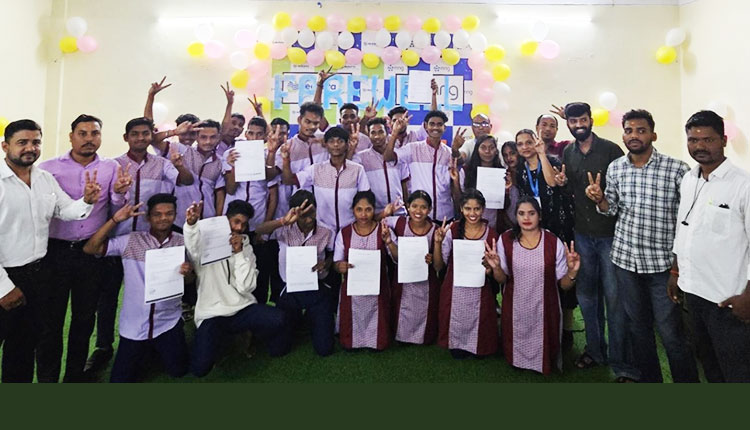
The scale of impact already reflects the growing relevance of such interventions: 1,185 students have enrolled in the programme, 853 candidates have secured placements in sectors such as hospitality, and 60 students are currently undergoing internships, gaining hands-on industry exposure before transitioning into full-time employment.
Through strong industry linkages, trainees have found opportunities with leading hotels and hospitality chains across India. However, the true impact of Vedanta Aluminium’s initiatives is best understood through the many stories of individual resilience and transformation.
Dasabanti Chandan, hailing from Kalahandi, has one such story. Widowed at a young age and raising a child amid severe financial hardship, she faced an uncertain future with limited educational qualifications and no stable source of income. Through the Vedanta Skill Development Centre in Bhawanipatna, she enrolled in the Guest Service Associate course, where she received training in professional hospitality practices and workplace readiness. Within months, she secured employment at a major electronics firm in Bengaluru, enabling her to achieve financial independence and create a more secure future for her child.
For young people like Laxmi Majhi, skilling has also become a pathway to overcoming both social and economic barriers. Coming from a farming family in Odisha’s Balangir district, Laxmi had to discontinue her education after Class 10 due to financial constraints. With limited prospects available, she enrolled at the Vedanta Skill Development Centre, where she received training in hospitality operations and communication skills. The programme helped her transition into professional employment, opening the door to financial stability and personal confidence.
Vedanta Aluminium’s skilling initiatives reflect a broader shift in how community development efforts are evolving in India. By integrating vocational training with industry partnerships and placement opportunities, the Vedanta Skill Development Centres are working towards creating sustainable employability outcomes rather than temporary support systems, contributing to a more confident, skilled, and employable workforce for the future.