





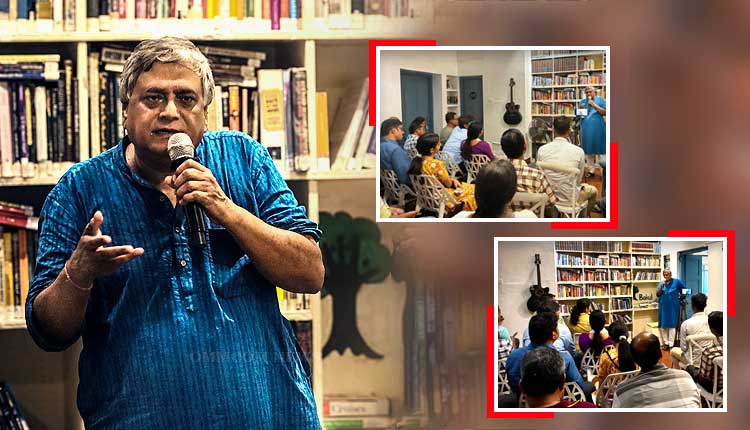
Bhubaneswar: Long before Bhubaneswar grew into the bustling capital city it is today, a group of Punjabi families who arrived in Odisha in the aftermath of Partition quietly helped lay the foundations of its development. From constructing some of the city’s most iconic buildings to establishing one of its earliest residential colonies, the Punjabi community played a crucial role in shaping Bhubaneswar’s social and commercial landscape, historian Anil Dhir said during a talk here on Sunday (May 31).
The lesser-known story of the community’s contribution came alive during an engaging session at Café 16 in Satya Nagar as part of the “Ekamra Talkies” series organised by Bakul Foundation and Café 16.
Addressing the gathering, Dhir traced the origins of the Punjabi Colony in Satya Nagar and highlighted the contribution of Punjabi families who settled in the city during its formative years.
“Good morning. Jai Jagannath, Sat Sri Akal. Today, I will speak about a very interesting topic—the Punjabis and the Punjabi Colony,” Dhir said. “We did not have colonies named after other communities, but we had a Punjabi Colony because it was one of the earliest colonies in Bhubaneswar.”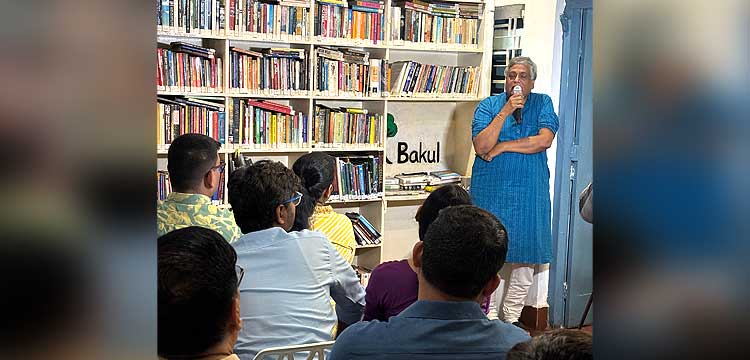
Drawing on personal memories, Dhir said he arrived in Bhubaneswar when he was just a year old and has spent almost his entire life in the city.
“I was born in Cuttack, but we moved here when I was very young. The Punjabi Colony was predominantly occupied by Punjabis, both Sikhs and Hindus. Most of the people who settled here were affected by Partition,” he said.
According to Dhir, Odisha was not a preferred destination for people displaced by Partition. Most Punjabi families came to the state through employment opportunities and construction projects rather than through direct migration from border regions.
“I would not call them refugees, but people whose lives were affected by Partition. Surprisingly, Odisha was not the destination. Very few people knew much about the state then. Most of them came here because of work and opportunities,” he said.
As Bhubaneswar emerged as a planned capital after Independence, it attracted skilled professionals and contractors from different parts of the country. Dhir noted that many Punjabis, particularly those experienced in railway construction and large-scale infrastructure projects, became actively involved in building the new city.
“The Secretariat, the Assembly, the government quarters and Utkal University were all built by prominent Sikh contractors,” he said.
The historian also shared memories of the early days of the Punjabi Colony, which eventually became home to around 40 Punjabi families. He credited his father as one of the pioneers who encouraged members of the community to settle in Bhubaneswar.
Recalling the landscape of the city several decades ago, Dhir described a vastly different Bhubaneswar, surrounded by forests and open land.
“Those days, there were very few houses here. The area was covered with thick vegetation, and wildlife sightings were quite common. We would often see jackals, and occasionally even tigers ventured close to the colony,” he said.
The anecdotes offered a glimpse into a young Bhubaneswar that remained closely connected to nature while gradually developing into a modern administrative capital.
Dhir also reflected on a difficult chapter in the community’s history. He said several Punjabi families left Bhubaneswar following the anti-Sikh riots of 1984, when concerns over safety and uncertainty prompted many to relocate elsewhere.
The talk sparked lively discussions among attendees and shed light on a lesser-known aspect of Bhubaneswar’s history. It highlighted how migrant communities contributed not only to the city’s infrastructure but also to its cultural and social fabric.
Members of the Punjabi community, eminent citizens and history enthusiasts attended the event. The programme began with welcome remarks by Bakul Foundation founder Sujit Mahapatra and concluded with a vote of thanks.