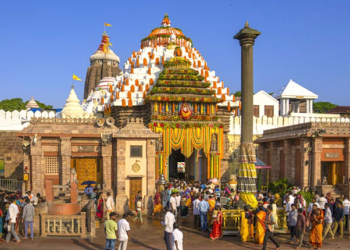







Hundreds of sacred services also called sevas are performed every single day inside the Shree Jagannath Temple. At the apex stands the Gajapati Maharaja, the foremost servitor of Lord Jagannath and His siblings. Supporting this ancient tradition are generations of hereditary servitors who have been rendering dedicated service for centuries. The foundation of this structured system was laid in the 13th century by King Anangabhima Dev III, who introduced 120 categories of sevas and appointed servitors for each. Over time, more services were added according to the needs of the temple. These rituals have continued for hundreds of years, surviving the test of time, royal patronage, and historical upheavals — including invasions, particularly by the Mughals, which forced later Gajapati kings to discontinue some of the rituals. However, it is not only the temple servitors who render service to Mahaprabhu. Beyond the sacred boundaries of the Shree Jagannath temple, a few devotees continue to serve the Lord in their own quiet, heartfelt ways.
One such shining example of selfless devotion comes from Berhampur. For the past 16 years, Rajendra Prasad Mohapatra and his wife Bhabana have been offering fresh flowers, sacred Tulsi, banana leaves, and jackfruit leaves from their own garden to Lord Jagannath — without missing a beat.
Residents of Bhabanagar in Berhampur, the couple turned their personal longing for Lord Jagannath into a beautiful lifelong commitment. What began in 2010 as a simple thought — “We take so much from the Lord, what are we giving back?” — has now become a sacred routine.
“We used to visit Puri regularly for darshan,” the couple recalls. “But one day we realised that while we were receiving so much, we wanted to give something in return. That’s when we decided to send flowers and Tulsi from our garden.”
Their garden is a labour of love and devotion, filled with a rich variety of flowers and lush Tulsi plants. They personally pluck the flowers early in the morning, prepare the parcels, and send them by bus to Puri. However, they discontinued the service during Covid-19 for some time. Later they resumed the service the moment it became possible.
On asking them how it all began, Rajendra said, “We are originally from Banka village near Belguntha in Ganjam district. My father was a zamindar (landlord) during his time. After moving to Berhampur in 1964, the family started a transport business in 1975.I and my wife used to spend most of our time in the worship and rituals of Lord Jagannath. We used to visit Puri Jagannath temple during our leisure time. Once, we happened to see some servitors collecting flowers in the Nilachala Upaban (temple garden) for Mahaprabhu and His siblings. That sight deeply inspired us. We purchased a plot of land near their house and planted a wide variety of flower plants and Tulsi. The flowers bloomed in abundance.”
The couple feels deep satisfaction when they learn that their flowers are used for the grand Badasinghara Besha — the majestic night-time adornment of the deities.
Rajendra and Bhavana, now in their sixties, lead a simple, vegetarian life dedicated to puja and gardening. After completing household work, both spend their remaining hours tending to the plants, nurturing them according to the seasons, and ensuring the offerings reach the temple without fail.
In an era where devotion often seeks recognition, this humble couple from Berhampur stands as a powerful reminder that true service to Lord Jagannath needs no title, no hereditary right, and no spotlight. It only needs a pure heart and dedicated hands.
While temple servitors continue the rituals inside the temple as per ancient customs, devotees like Rajendra and Bhavana Mahapatra prove that the spirit of seva is limitless — stretching far beyond the temple walls, reaching even a small garden in Berhampur.
By Rashmi Rekha Das