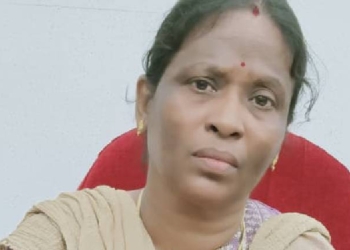






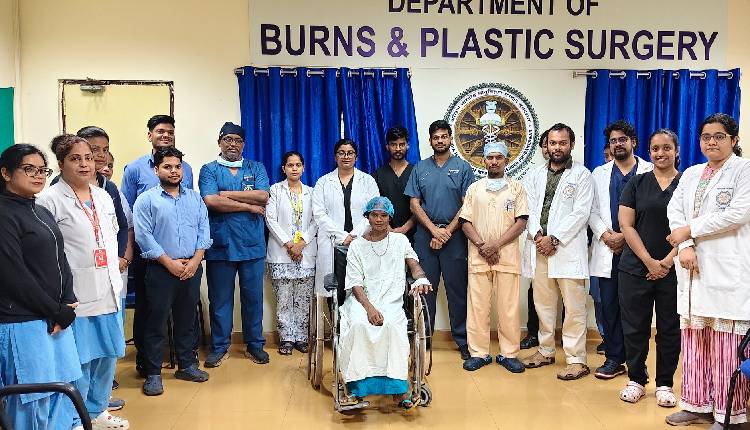
Bhubaneswar: In a major medical achievement, doctors at the All India Institute of Medical Sciences (AIIMS) Bhubaneswar have successfully excised a rare 7-kg giant plexiform neurofibroma from the arm of a 47-year-old woman, in a complex staged surgical procedure that restored function and improved her quality of life.
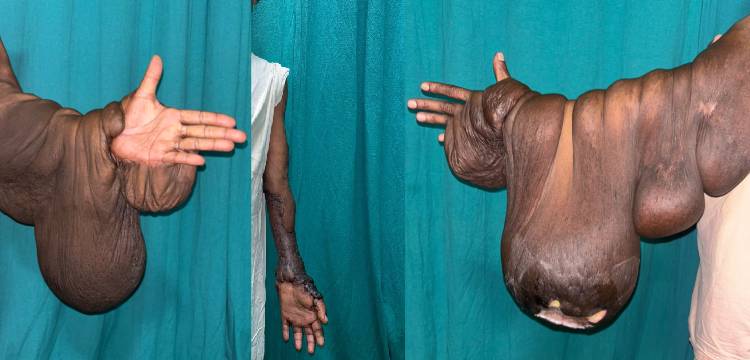
The patient, a daily-wage labourer from Baripada in Mayurbhanj district, had been suffering for years from a progressively enlarging swelling extending from the middle of her arm to the back of her hand. The mass had grown into a large, hanging tumour, severely affecting her mobility and daily activities.
Over time, the tumour became increasingly heavy, causing significant disability. It restricted shoulder movement, impaired hand function, and made routine tasks extremely difficult for the patient. The overlying skin had also darkened and developed ulcerations due to prolonged pressure effects.
Pre-operative evaluation revealed a highly vascular lesion measuring approximately 45 cm, making surgical management particularly challenging due to the high risk of bleeding.
Given the complexity of the condition, doctors opted for a two-stage surgical approach. In the first stage, the forearm component of the tumour was removed in a six-hour procedure. After a six-month interval, the second stage surgery was performed to excise the hand component, which lasted about three hours.
The procedures were carried out by the Department of Burns and Plastic Surgery, AIIMS Bhubaneswar. The surgical team included Dr. Sanjay Kumar Giri, Dr. Syama Sundar Behera, Dr. Ahana Bandyopadhyay, Dr. Surya Yashaswi PVS, Dr. Keerthi G, Dr. Nikhil Kumar Sharma, and Dr. Asutosh Adhikari, with anaesthetic support from Dr. Devishree Das and Dr. Pooja.
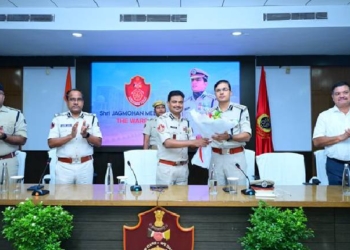
AIIMS Bhubaneswar Executive Director Dr. Ashutosh Biswas congratulated the team for the successful outcome and said the surgery had given the patient a new lease of life.
Doctors used advanced vessel-sealing technology (LigaSure) along with meticulous surgical planning to control intraoperative bleeding. The patient required blood transfusion support during the procedures.
Following tumour removal, the surgical team reconstructed the affected area using skin grafts harvested from usable skin of the excised tumour itself, thereby avoiding additional donor site wounds. The grafts have taken well, and the patient is recovering satisfactorily under regular follow-up and dressing care.