





Bhubaneswar: Odisha’s ongoing Special Intensive Revision (SIR)-2026 of electoral rolls has emerged as a model for other states, even as the Election Commission of India (ECI) conducted a high-level review of the programme’s progress in the Bhubaneswar Municipal Corporation (BMC) area on Friday.
A review meeting chaired by S.B. Joshi, Principal Secretary of the Election Commission of India, assessed the status of the ongoing revision exercise with a focus on preparing an accurate, inclusive and updated electoral roll.
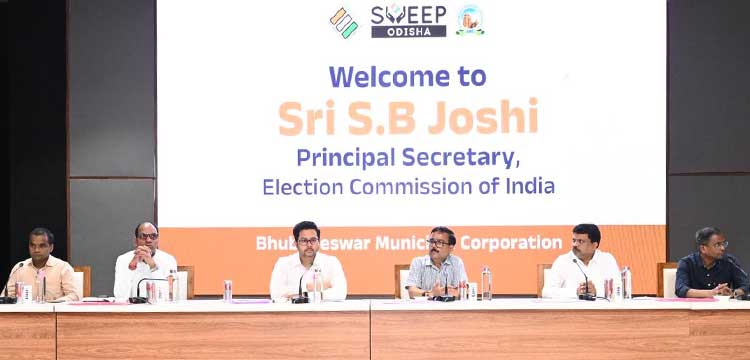
During the meeting, Joshi reviewed the progress of Special Intensive Revision activities in Assembly Constituencies 112, 113 and 114 with the Electoral Registration Officers (EROs) and Assistant Electoral Registration Officers (AEROs) concerned. The review covered the distribution of enumeration forms, digitisation of voter data and field-level implementation of the programme.
Officials were directed to ensure that the electoral process remains transparent and robust so that no eligible voter is excluded from the rolls. They were also asked to complete the revision exercise within the stipulated timeline.
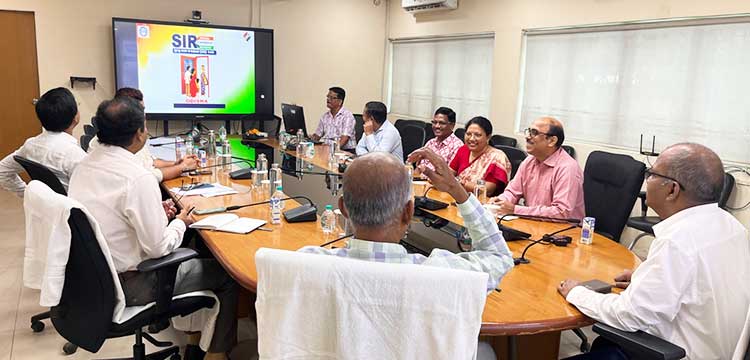
The meeting was attended by BMC Commissioner Chanchal Rana, Deputy Chief Electoral Officer Laxmiprasad Sahu, Additional Commissioners Shubhendu Kumar Sahu and Kailash Chandra Das, along with EROs and other election officials.
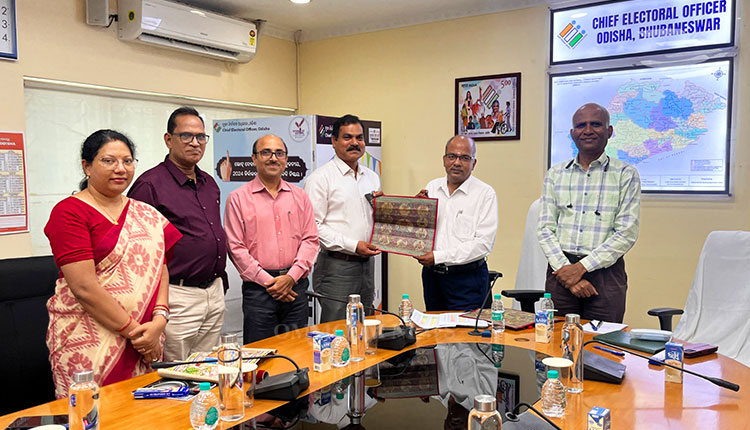
In a parallel development, Maharashtra Chief Electoral Officer S. Choklingam visited the office of Odisha’s Chief Electoral Officer to study the state’s implementation of the Special Intensive Revision programme.
At a high-level meeting chaired by Odisha Chief Electoral Officer R.S. Gopalan, Choklingam reviewed the measures adopted by Odisha from the planning stage to field execution of the revision exercise.
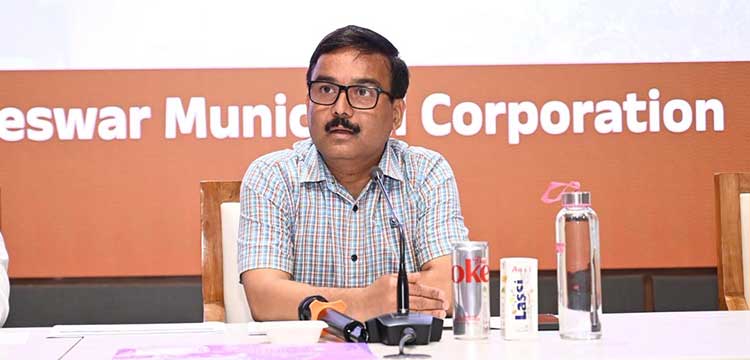
The Maharashtra CEO reportedly appreciated Odisha’s field-level arrangements, the streamlined distribution and collection of enumeration forms, digitisation of voter data and the state’s advanced monitoring mechanism.
According to official figures, enumeration forms have been distributed to 99.44 per cent of voters in Odisha, covering 3,32,13,393 electors. Of these, data pertaining to 2,20,61,739 voters, or 66.05 per cent, has already been digitised.
Officials said Odisha’s experience and best practices in implementing the Special Intensive Revision programme could serve as a useful reference for electoral processes in other states in the future.
Additional Chief Electoral Officer Sushant Kumar Mishra, Joint CEO Gopinath Kuonr, Finance Advisor Sanjay Kumar Lugun, Deputy CEO Anamika Singh and other senior officers were also present at the meeting.