
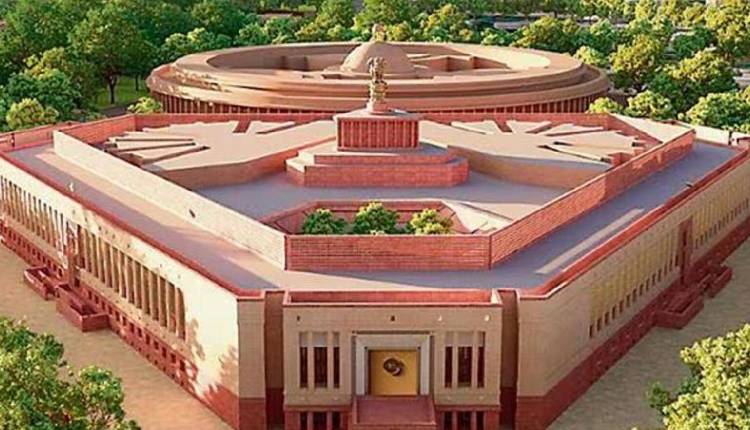
New Delhi: Union Parliamentary Affairs Minister Kiren Rijiju on Saturday announced that the Monsoon Session will commence on July 20 and will continue until August 13, for what he called a “meaningful debate” on the issues of national importance.
Taking to X, Rijiju said, “On the recommendation of the Govt of India, Hon’ble President, Smt. Droupadi Murmu ji has approved the summoning of both the Houses of Parliament for the Monsoon Session 2026. The session will commence on 20 July, 2026 and continue till 13 August, 2026 for meaningful debate, discussion and decisions on issues of National Importance.”
The four-week session will include 19 sittings.
The divisions within the Trinamool Congress, the rift between the DMK and Congress, and departures of MPs from the Uddhav Sena are likely to change the composition of Parliament.
The ruling NDA anticipates that its numbers will increase, while the Opposition INDIA bloc is poised for a decrease.
Lok Sabha Speaker Om Birla will make decisions regarding the merger of 20 rebel Trinamool MPs with the lesser-known NCPI. He will also determine the merger of six Uddhav Sena MPs with Eknath Shinde’s Shiv Sena.
Meanwhile, following Congress’ alliance with the TVK in Tamil Nadu, the DMK has sent a letter to the Speaker requesting new seating arrangements for its MPs, separate from the Congress.
Additionally, the 131st Constitution Amendment Bill concerning women’s reservation and delimitation, which was rejected in the previous session, is expected to be prioritised.
The government is likely to introduce the 130th Constitution Amendment Bill, which aims to automatically remove chief ministers, ministers, and the Prime Minister from office if they are detained or under judicial custody for 30 consecutive days in cases involving serious crimes.
The One Nation, One Election Bill is also expected to be on the Centre’s agenda.
The FCRA Bill, Viksit Bharat Shiksha Adhishthan Bill, and Anti-Doping Bill are also expected to be presented.
Proposals to replace the ordinance that increases the number of Supreme Court judges, along with bills related to the Code on Wages Central Rules, Corporate Law, and Securities Market Code, may also be introduced.
(IANS)