





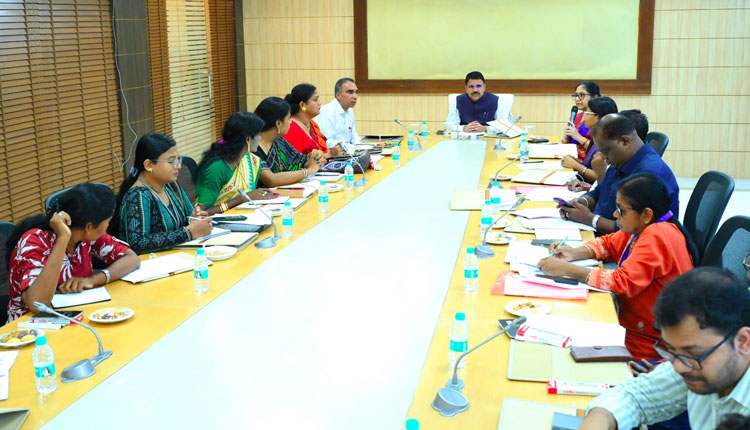
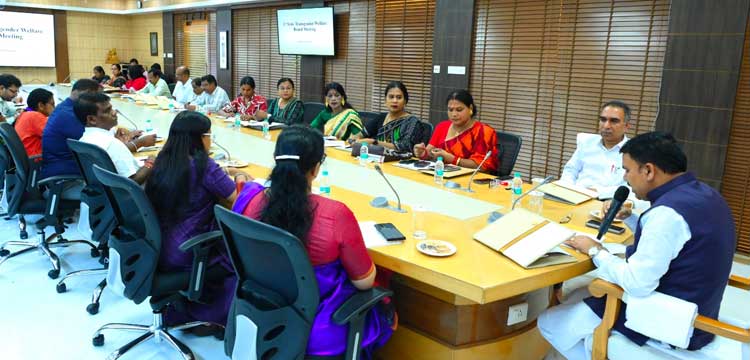
Bhubaneswar: The Government of Odisha reinforced its commitment to social inclusion, dignity, and equal rights by convening the inaugural meeting of the reconstituted State Transgender Welfare Board today. The high-level meeting was chaired by the Hon’ble Minister for Social Security & Empowerment of Persons with Disabilities (SSEPD), Nityananda Gond. Department officials and community representatives gathered to review ongoing welfare schemes and outline critical policy decisions to empower transgender individuals across the state.
The meeting was attended by Suresh Kumar Vashishth, Principal Secretary, SSEPD Department; Parul Patawari, Director, SSEPD Department; Sonia Behera, Additional Secretary; and Deepak Routrai, Additional Secretary. Officials and representatives from Balangir, as well as line department members from the Women & Child Development (WCD), Higher Education, School & Mass Education (S&ME), Health & Family Welfare (H&FW), and Panchayati Raj & Drinking Water (PR&DW) departments were also present. The session saw active participation from community leadership, including representatives of the TG SURAKHYA TRUST, CHETANA (Balugaon), and representatives from the Transgender Person Community.
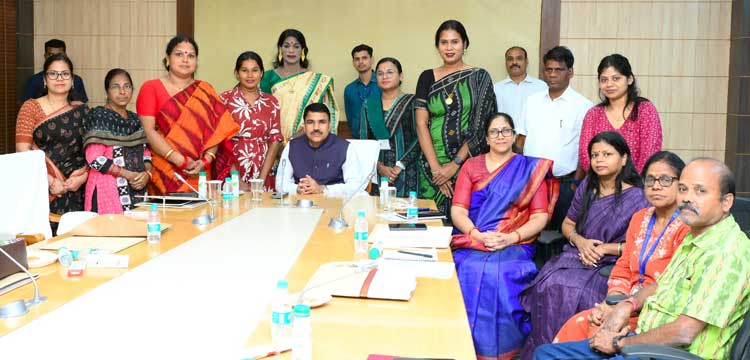
During the meeting, Minister Nityananda Gond highlighted the major achievements made under state and central flagship initiatives. Under the Sweekruti scheme, 80 Transgender Self-Help Groups (SHGs) have been formed, with 41 groups already receiving a one-time financial support of ₹50,000 to boost self-reliance and entrepreneurship. Furthermore, under the SMILE scheme, 3,159 Transgender Certificates and Identity Cards have been issued in Odisha, the Ayushman Bharat TG Plus health card rollout is progressing, and the Garima Greh shelter home in Bhubaneswar is currently providing safe residence and rehabilitation for 25 inmates.
To ensure equal opportunities in public employment, the Minister reaffirmed strict implementation of state guidelines directing all government recruitment portals and examination rules to explicitly include “Transgender/Third Gender” as a distinct option. Crucial safety measures were also prioritized, including the operationalization of District Transgender Protection Cells chaired by District Collectors to swiftly register complaints, investigate crimes, and guarantee legal protection. Additionally, proposals were introduced to curb social media defamation against transgender individuals and to establish a dedicated Transgender Cyber Protection Cell alongside a toll-free helpline number.
Addressing healthcare, education, and basic rights, the Board deliberated on key welfare proposals to further mainstream the community. These include providing free gender-affirmation surgeries at government medical colleges, setting up dedicated healthcare facilities, and extending housing benefits under the PM-AWAS and Basundhara schemes. In education, discussions centred on providing a 1% reservation, tuition fee waivers, separate hostels, and dedicated toilet facilities across educational campuses. The Board also proposed constructing a community hall in Puri and conducting a comprehensive census of the LGBT community to enable data-driven policy planning.