




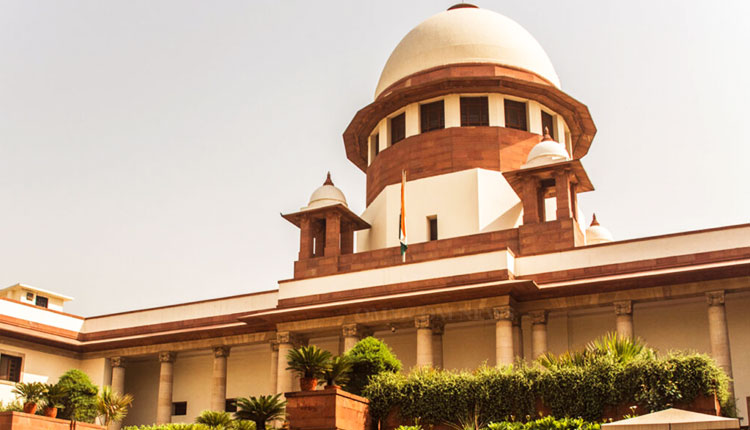
New Delhi: The Supreme Court on Thursday refused to interfere with the Calcutta High Court’s order upholding the Election Commission of India’s (ECI) decision to transfer several senior bureaucrats and police officers in West Bengal ahead of the Assembly elections, observing that such reshuffles before polls are a common practice.
A bench, headed by Chief Justice of India (CJI) Surya Kant, declined to entertain the plea challenging the large-scale transfers ordered by the Election Commission, saying that transfers of officials before elections were routine and had taken place in several states in the past as well.
During the hearing, senior advocate Kalyan Bandopadhyay, appearing for the petitioner, contended that the poll body had ordered the transfers without consulting the West Bengal government and argued that such action was contrary to the statutory framework.
However, the CJI-led Bench remarked that such transfers were not unprecedented and said that “an observer from outside the state is always ideal” to ensure fair elections.
The petitioner contended that the consultation of the state government was a necessary requirement and that, for the first time, even the Chief Secretary had been replaced without concurrence.
While the apex court found “some substance” in the argument regarding the need for consultation with the state, it declined to interfere in view of the impending Assembly elections, leaving the question of law open for consideration in an appropriate case.
“Such issues may be examined at a later stage,” the bench indicated, making it clear that it was not inclined to interfere in the present matter.
The plea had challenged the Calcutta High Court’s judgment dismissing a public interest litigation (PIL) against the ECI’s decision to transfer key officials, including the Chief Secretary, Director General of Police (DGP), Home Secretary, several District Magistrates and Superintendents of Police.
In its March 31 judgment, the Calcutta HC had held that the petitioner himself had acknowledged in the writ petition that the poll body possessed the power to transfer officers to ensure free and fair elections. It said that once the existence of such power was admitted, the court was not inclined to undertake a “roving enquiry” into the ECI’s authority to order the transfers.
The Calcutta High Court had also observed that no “administrative numbness” or paralysis had been caused in the state administration merely because officers were transferred and replaced by other officers, including more senior officials in some cases.
It further ruled that merely because a “sizable number of officers” were shifted, the action could not be termed arbitrary or mala fide, especially when similar exercises were carried out across the country.
The PIL before the Calcutta High Court had argued that the mass transfers undermined the authority of the elected state government and disrupted the administrative machinery. The controversy dates back to March, when the ECI ordered widespread transfers of top officials in West Bengal after the Model Code of Conduct came into force ahead of the Assembly elections. The move drew objections from the state government, with Chief Minister Mamata Banerjee alleging that the poll body had acted unilaterally and undermined the authority of the elected state government.
(IANS)