
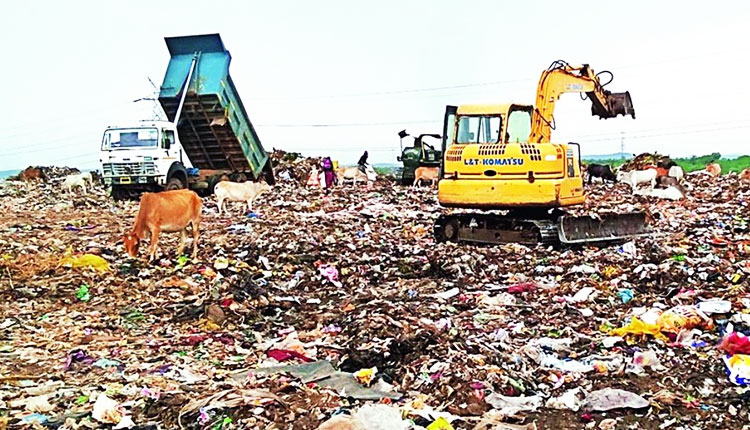
Bhubaneswar: The Bhubaneswar Municipal Corporation (BMC) has officially rolled out Phase 2 of its ambitious bio-mining project at the Bhuasuni dumping yard, aiming to scientifically process an additional 9 lakh metric tonnes of legacy waste in a phased manner.
The move is expected to significantly enhance the city’s waste remediation efforts and mark a major stride towards sustainable urban waste management.
According to BMC officials, the second phase will be implemented in three stages. Over the past three years, the civic body has already cleared nearly 12 lakh metric tonnes of accumulated waste from the site. With the launch of Phase 2, the total volume of legacy waste processed at Bhuasuni is projected to reach approximately 21 lakh metric tonnes.
Bio-mining involves the systematic segregation and scientific treatment of mixed waste, enabling the recovery and recycling of usable materials while ensuring safe disposal of the rest. The Bhuasuni site, which operated as the city’s primary dumping ground from 2008 to 2022, is now being systematically remediated to minimise its long-term environmental footprint.
The shift to bio-mining began in 2023 following strict directives from the National Green Tribunal (NGT), which instructed urban local bodies to end open dumping practices and adopt scientific waste processing methods. Officials have confirmed that no fresh waste is currently being dumped at the Bhuasuni site or alternative locations such as Daruthenga.
The BMC eventually addressed these concerns and fulfilled its commitments, paving the way for the project’s progress. The successful execution of Phase 2 is now being viewed as a crucial step in strengthening Bhubaneswar’s environmental compliance, reducing pollution risks, and improving public health outcomes in the surrounding areas.