
Bhubaneswar: In a significant step towards restoring the health of urban water bodies, the Odisha Cabinet on Monday approved the outcome of the bidding process for the construction of a major Waste Water Treatment Plant at the confluence point of River Daya and Gangua Nallah on an Engineering, Procurement & Construction (EPC) basis, including Operation & Maintenance for five years.
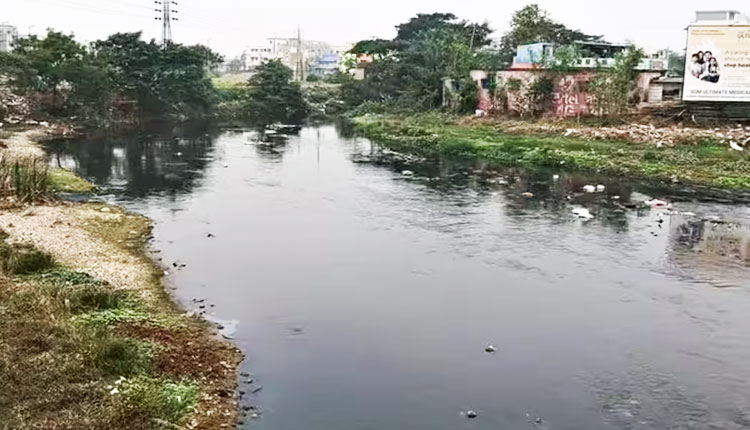
The project, to be implemented by the Water Corporation of Odisha (WATCO), aims to tackle the severe pollution of Gangua Nallah, which currently carries a large volume of untreated sewage from various parts of Bhubaneswar into River Daya.
This unchecked discharge has been causing serious environmental degradation, affecting ecological balance, groundwater quality, and public health in the state capital. The primary objective of the project is to intercept, divert, and treat the sewage and wastewater flowing through Gangua Nallah before it merges with River Daya, thereby improving water quality and ensuring compliance with national pollution control norms.
Key Components of the Project:
Sewage Treatment Plant (STP): 60.00 MLD capacity based on SBR (Sequential Batch Reactor) Technology.
Pumping Main: Ductile Iron (DI K9) pipeline of 800 mm diameter for 1,100 metres.
Sewage Pumping Station: One wet well type station with 900 mm diameter.
SCADA & Automation along with other allied works.
Dedicated feeder line for reliable power supply.
Following the evaluation of financial bids submitted by technically responsive bidders, the lowest bid amounting to ₹100.89 Crore (including GST) has been approved. The work will be executed by the selected agency, M/s. East India Udyog Limited, Noida.
The project is scheduled to commence on 1st May 2026 and is expected to be completed by 30th April 2028.
This initiative is being seen as a crucial intervention for the rejuvenation of River Daya and the overall improvement of Bhubaneswar’s drainage and sanitation infrastructure. Once operational, the 60 MLD STP along with the associated infrastructure is expected to significantly reduce pollution load in the river system.