





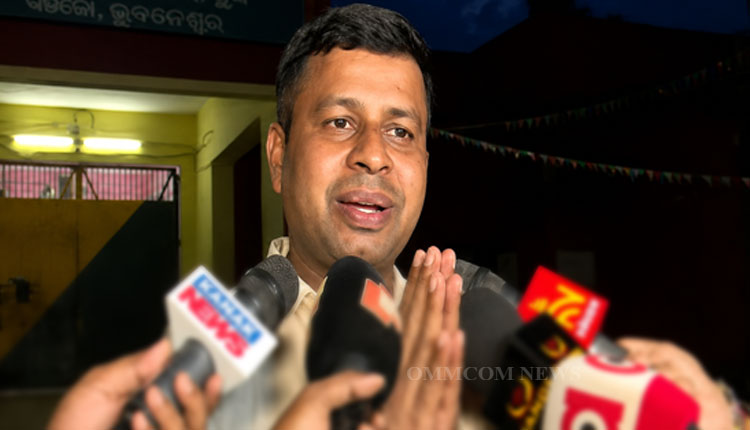
Bhubaneswar: A special court in Paralakhemundi on Tuesday acquitted alleged Maoist D Keshab Rao alias Azad in the 2008 murder of VHP functionary Swami Laxmanananda Saraswati and four others at Jalespata Ashram in Kandhamal, observing that the prosecution had failed to establish his involvement in the killings beyond reasonable doubt.
Rao, who had been in custody since 2011, was released from Jharpada jail in Bhubaneswar on Tuesday evening.
Additional Sessions Judge (Special Court), Paralakhemundi, Satyanarayan Patra acquitted Rao of charges relating to murder, rioting, criminal conspiracy and house trespass under the IPC, as well as charges under the Arms Act.
The court held that although the prosecution had established that an armed group carried out the attack on August 23, 2008, it had failed to conclusively establish that Rao was part of the group that carried out the killings.
“The prosecution has consequently failed to establish beyond reasonable doubt that D Keshab Rao participated in the murder of any of the five deceased persons,” the court observed.
The court also said doubts over Rao’s involvement arose from the prosecution’s own evidence and cautioned that suspicion could not be converted into proof merely because the offence was heinous.
According to the prosecution, around 20 to 25 armed assailants stormed Jalespata Ashram in Kandhamal on the evening of August 23, 2008, and opened indiscriminate fire. Swami Laxmanananda Saraswati, Mata Bhaktimayee, Kishore Baba, Amrutananda and Puranjan Ganta were killed in the attack.
A letter purportedly issued by the CPI (Maoist)’s Bansadhara divisional committee and signed in the name of “Azad” was allegedly recovered from the spot.
However, the court found several gaps in the prosecution’s case. Except for the informant, no eyewitness identified Rao as one of the attackers. Several witnesses said the assailants were wearing masks or monkey caps that covered their faces, making identification difficult.
The court held that the informant’s identification of Rao in court, without independent corroboration, was not sufficient to sustain a conviction.
The judge also pointed out that no firearm or other incriminating material had been recovered from Rao. There was no ballistic or forensic evidence linking him to the crime scene, while no handwriting expert had established that the Maoist letter recovered after the attack had been authored by him.
The court further noted that witnesses cited by the prosecution to establish Rao’s involvement did not support its case during the trial.
Eight persons were sentenced to life imprisonment by a Kandhamal court in 2013 for the murders. Rao’s trial was conducted separately after charges were framed against him in July 2025, as he had earlier been facing proceedings in other cases.
Rao was taken into Odisha Police custody in June 2011 after reportedly surrendering before Andhra Pradesh Police in May that year. He had remained in prison since then.
The acquittal comes nearly 18 years after the Jalespata Ashram killings, with the special court concluding that the evidence against Rao did not meet the standard required for a criminal conviction.