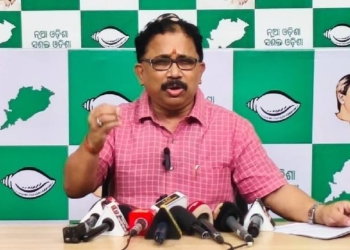






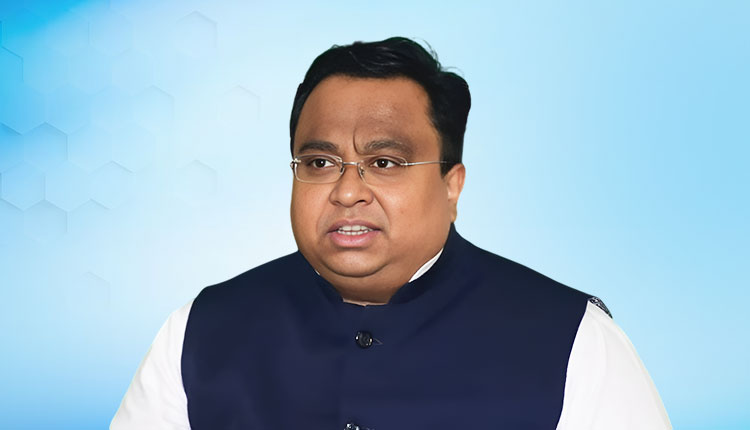
Bhubaneswar: Senior Biju Janata Dal (BJD) leader and Rajya Sabha MP Sasmit Patra has urged the Centre to bring petrol and diesel under the Goods and Services Tax (GST) regime, stating that such a move could help rationalise fuel prices and reduce the burden on consumers.
In a letter to Union Finance Minister Nirmala Sitharaman, Patra has requested that the proposal be placed on the agenda of the upcoming GST Council meeting for formal discussion and consensus-building between the Centre and States.
He has argued that an indicative GST rate of 28% on petroleum products could potentially reduce petrol prices in Odisha by nearly Rs 25 per litre and diesel by around Rs 14 per litre, besides altering the revenue structure for both the Centre and the State.
Citing constitutional provisions under Article 279A(5), the MP noted that petroleum products such as petrol, diesel, natural gas and aviation turbine fuel are not permanently excluded from GST and may be brought under its ambit based on the GST Council’s recommendation. He said the constitutional framework keeps open the possibility of their inclusion in future.
Patra also referred to earlier deliberations on the issue, including discussions held during the 45th GST Council meeting in September 2021. The proposal, however, was deferred at the time due to concerns raised by several States over potential revenue losses.
Highlighting the economic impact of high fuel prices, the BJD leader said petrol and diesel rates have a direct bearing on inflation, transportation costs, agriculture, and household expenditure. He noted that fluctuations in fuel prices significantly affect the cost of essential commodities, including food grains and construction materials.
Citing Odisha as an example, Patra said the State currently imposes around 28% VAT on petrol and 24% on diesel, contributing to retail prices that have recently averaged about Rs 101–Rs 102 per litre for petrol and Rs 92–Rs 94 per litre for diesel.
He further stated that inclusion of petroleum products under GST could help reduce retail prices and ease input costs in agriculture and transport sectors, particularly as diesel remains crucial for irrigation and farm mechanisation.
At the same time, Patra acknowledged that fuel taxation constitutes a major source of revenue for both the Centre and States. He cautioned that any transition to GST would require a carefully designed compensation mechanism to protect State finances.
To address these concerns, he suggested a phased implementation model, calibrated tax rates, transitional compensation support for States, and a possible cess-based arrangement during the transition period.
Concluding his letter, Patra said that bringing petrol and diesel under GST would strengthen cooperative federalism, reduce price disparities across States, and improve logistics efficiency while benefiting consumers.
The issue of bringing petroleum products under GST has been under discussion since the rollout of the indirect tax regime in 2017 but has not yet been implemented due to a lack of consensus among States over revenue implications.