





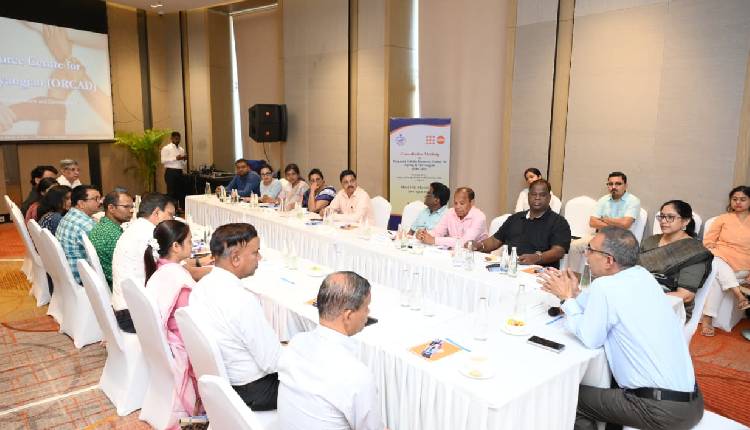
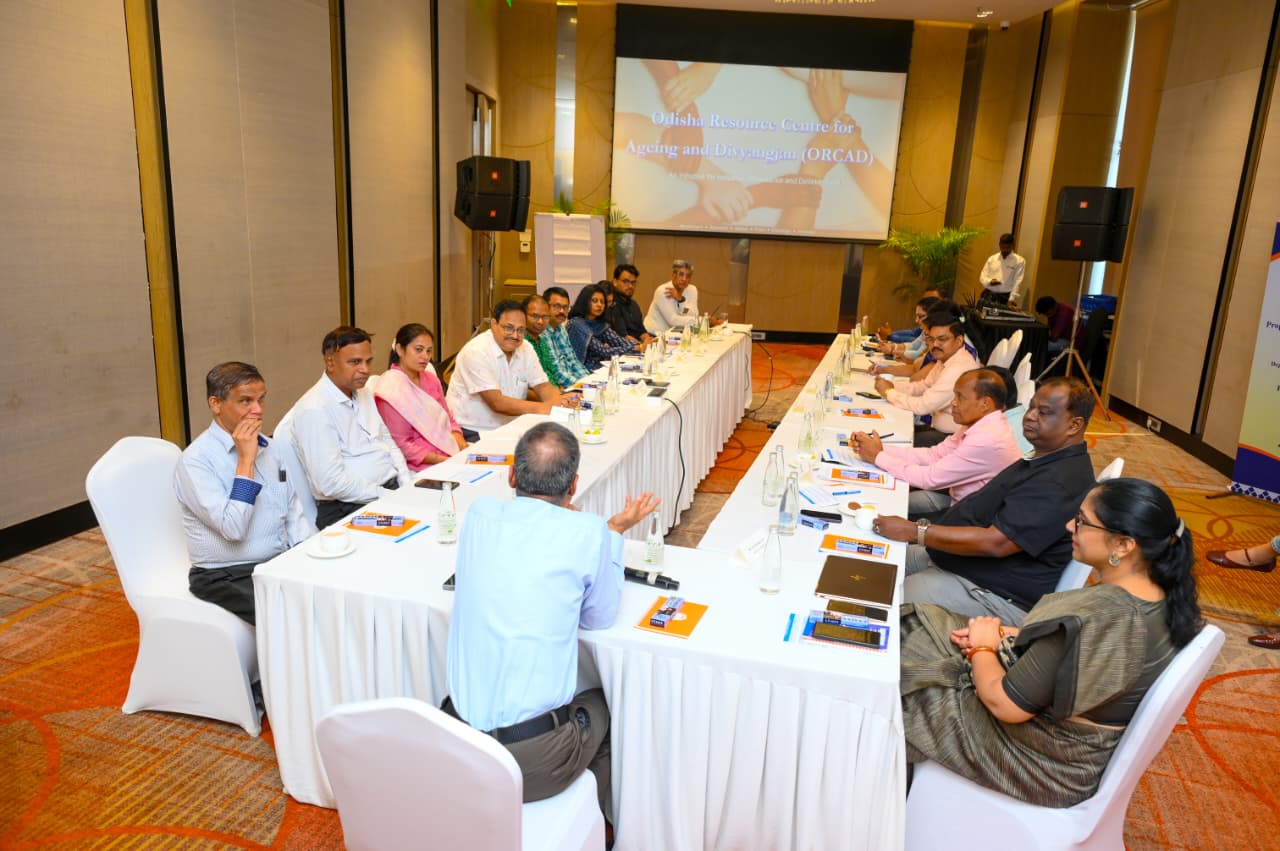
Bhubaneswar: In response to Odisha’s evolving demographic profile and the growing need for integrated, future-ready systems to support older persons and persons with disabilities, a high-level consultative meeting on the proposed Odisha Resource Center for Ageing & Divyangjan (ORCAD) was convened in Bhubaneswar today.
The consultation was organised by the Department of Social Security & Empowerment of Persons with Disabilities (SSEPD), Government of Odisha, in collaboration with the United Nations Population Fund. It brought together senior government officials, representatives of United Nations agencies including the United Nations Development Programme and UNICEF, along with development partners and domain experts.
Envisaged as a state-level centre of excellence, ORCAD aims to serve as a strategic anchor for advancing inclusion, accessibility, and coordinated service delivery for elderly persons and Divyangjan across Odisha. The Centre is expected to strengthen convergence across departments, enable evidence-driven policy and programming, and build capacities across administrative levels, thereby enabling their meaningful participation in the State’s economic and social development, in alignment with the vision of Viksit Odisha 2036 and 2047.
Suresh Kumar Vashishth, Principal Secretary of the SSEPD Department, underscored the importance of developing responsive and inclusive systems that can address the complex and intersecting needs emerging from demographic transition. He reaffirmed the State’s commitment to ensuring dignity, independence, and equitable access to opportunities for all.
Parul Patawari, Director of the SSEPD Department, highlighted the envisioned role of ORCAD as a knowledge and resource hub that will support research, capacity building, and policy innovation. She emphasised the need for institutional mechanisms that can translate data and insights into effective, scalable interventions and embed inclusion within the State’s governance architecture.
The consultation witnessed participation from key departments including Health & Family Welfare, School & Mass Education, Higher Education, Mission Shakti, Panchayati Raj & Drinking Water, and Women & Child Development, along with technical experts.
Rich discussions and valuable inputs were shared during the consultation, generating actionable insights that will further refine and inform the institutional design, governance structure, and implementation roadmap for ORCAD.
Nadeem Noor, State Head, United Nations Population Fund, Odisha, presented the proposed institutional framework for ORCAD, developed in partnership with the SSEPD Department.
The session was chaired by the Principal Secretary, SSEPD Department.
The proposed ORCAD initiative marks a significant step towards strengthening Odisha’s governance ecosystem for inclusive development, advancing a shift from welfare-oriented approaches to rights-based, institutionalised inclusion.