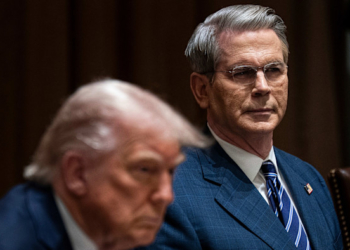






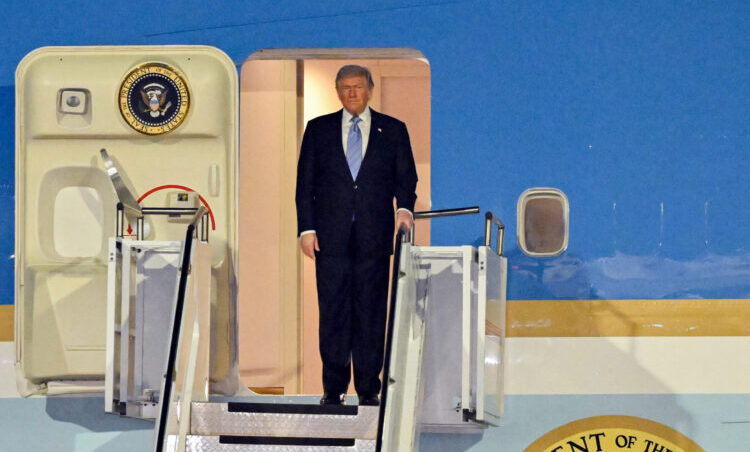
Beijing: US President Donald Trump arrived in Beijing on Wednesday evening for a State Visit to China.
At the invitation of Chinese President Xi Jinping, Trump is visiting China from May 13 to 15.
This is the first US presidential visit to China in almost nine years and Trump’s second since November 2017.
The two leaders will have an in-depth exchange of views on major issues concerning bilateral relations and world peace and development, according to China’s foreign ministry, Xinhua news agency reported.
Trump was welcomed by Chinese Vice President Han Zheng at the airport.
Xi and Trump met last time in October 2025 in South Korea’s Busan.
Chinese Foreign Ministry spokesperson Guo Jiakun said on Monday that China is willing to work with the United States in the spirit of equality, respect, and mutual benefit to expand cooperation, manage differences, and inject more stability and certainty into a turbulent and changing world.
Meanwhile, several US lawmakers pressed Secretary of War Pete Hegseth over Trump’s trip to China, warning that allies such as Taiwan, Japan and the Philippines were closely watching whether Washington would stand firm against Beijing’s growing military and economic influence.
China emerged as a dominant theme during a lengthy Senate Appropriations Subcommittee on Defence hearing on Trump’s proposed $1.5 trillion defence budget, with lawmakers from both parties describing Beijing as America’s biggest long-term strategic challenge.
Committee Chairman Mitch McConnell directly questioned Hegseth about whether Indo-Pacific allies could trust the United States not to compromise their security interests during Trump’s meetings in Beijing.
“We all agree they’re the greatest long-term military and economic challenge to the US and our Western allies as well,” McConnell said, referring to China. He added that “Taiwan, Japan and Philippines look to us.”
McConnell also sought assurances that freedom of navigation in the South China Sea would remain protected during the diplomatic engagement with Beijing.
Hegseth declined to speak directly on Trump’s negotiating strategy but insisted the administration remained focused on strengthening America’s position in the Indo-Pacific.
“Every aspect of what he pursues inside this relationship is to ensure that American interests are advanced,” Hegseth said of Trump.
The Defence Secretary said the Pentagon had intensified cooperation with regional allies, including Japan and the Philippines, to build stronger military coordination and deterrence.
“We’ve focused in that area of operations to ensure that Admiral Paparo has every option available to include with partners to create all the dilemmas necessary to give America every advantage possible,” Hegseth said.
Pressed specifically on maritime security, Hegseth declared: “American ships should sail freely.”
Several lawmakers tied China directly to the broader crises involving Iran and Russia.
Senator Chris Coons warned that Russia, China, North Korea and Iran were increasingly coordinating against the United States and its allies. He argued Beijing and Moscow were helping Iran replenish military supplies, including drones used to threaten shipping in the Strait of Hormuz.
(IANS)