





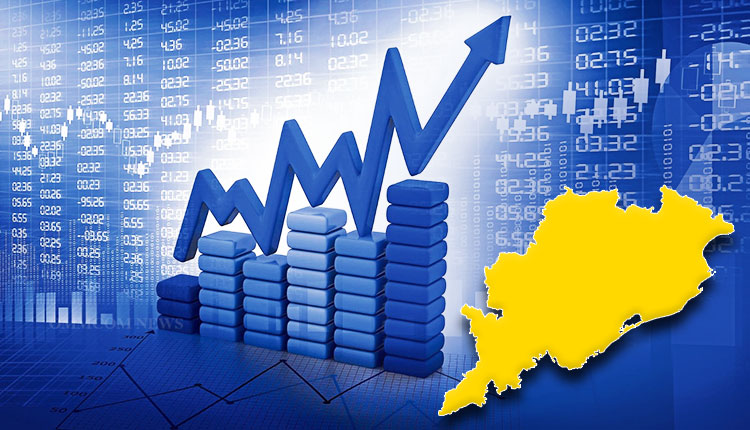
Bhubaneswar: Odisha’s economy grew at a moderate rate of 11.40 per cent in 2024–25 compared to previous year, with Gross State Domestic Product (GSDP) rising to ₹8.90 lakh crore from ₹5.40 lakh crore in 2020–21, reflecting a compound annual growth rate of 13.30 per cent, according to the Comptroller and Auditor General’s (CAG) State Finances Audit Report (Report No. 3 of 2026).
Despite the steady economic expansion, the report cautioned that structural weaknesses in revenue mobilisation, expenditure management and financial reporting could affect the state’s long-term fiscal sustainability.
Odisha maintained a stable fiscal position during the year, recording a revenue surplus of ₹22,651 crore (2.54 per cent of GSDP), while the fiscal deficit stood at ₹25,042 crore (2.81 per cent of GSDP), within the prescribed ceiling of 3 per cent. Total liabilities were also contained at 15.48 per cent of GSDP.
However, revenue growth lagged behind economic expansion. Revenue receipts increased by just 2.43 per cent to ₹1.83 lakh crore, while revenue buoyancy fell to 0.21 and own-tax buoyancy to 0.02, indicating weak responsiveness of revenues to growth.
On the expenditure front, revenue expenditure accounted for 87.69 per cent of revenue receipts, limiting fiscal space for development. Subsidy expenditure surged to ₹9,134 crore, driven largely by support under the Samrudh Krushak Yojana.
Capital expenditure rose to ₹45,481 crore, with its share in total spending increasing to 22 per cent. However, the audit flagged misclassification of ₹721 crore as capital expenditure and noted that fund transfers to personal ledger accounts inflated the reported figures.
The report also highlighted governance concerns, including non-remittance of ₹5,146.76 crore in dividends by 27 state public sector undertakings and significant delays in financial reporting, with utilisation certificates worth ₹16,585.45 crore pending.
Budgetary inefficiencies persisted, with savings of ₹56,157 crore (19.5 per cent) against total budget provisions, pointing to gaps in planning and execution.
While the debt-GSDP ratio declined, the state faces repayment pressures, with over half of its borrowings due within the next seven years.
The CAG underscored the need for improved revenue mobilisation, realistic budgeting, and stronger financial discipline to ensure sustainable growth and efficient public spending.