





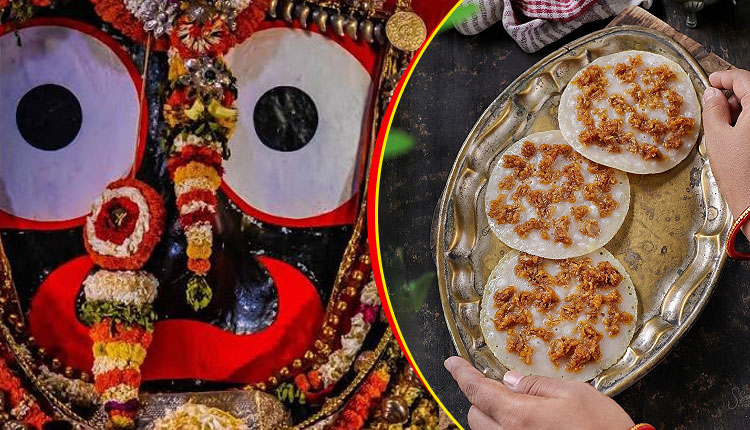
Walk into an Odia household today and the air is almost certain to carry a warm, sweet fragrance that signals a special occasion. It is Chitalagi Amavasya, a day that holds deep cultural and emotional value for people across Odisha, and at the centre of the festivities is the beloved Chitau Pitha.
In Odisha, festivals and pithas share an inseparable bond. These soft rice-based delicacies form an essential part of the state’s culinary heritage and are prepared with care on significant days throughout the year. Among them, Chitau Pitha occupies a particularly cherished place on Chitalagi Amavasya.
For many, the festival feels incomplete without this coconut-laced rice pancake. The dish also carries strong religious importance. At the Srimandir in Puri, Chitau Pitha is traditionally offered to Lord Jagannath along with his siblings, reflecting the close relationship between faith, food, and culture that defines Odia life.
Away from the temple, the same spirit fills ordinary homes. Families come together to prepare the pitha, turning the day into a celebration of togetherness. As the sweet aroma spreads through kitchens and living rooms, the festival becomes more than a ritual.
Ommcom News delves into the heart of Odisha’s spiritual calendar to explore the significance of Chitalagi Amavasya.
Legend
According to historical accounts, during the invasion of Kalapahada, the Chaturdhamurti of Jagannath temple were hidden in Subarnapur for safekeeping. Later, under the guidance of Adi Shankaracharya, King Jajati Keshari brought the deities back and installed them in the Srimandir, where they were consecrated on the Ratna Bedi with a grand Patta Abhishek ceremony. It was during this ceremony that the golden adornments studded with precious stones were offered to the deities.
From that day forward, this day came to be known as Chitalagi Amavasya, observed in the month of Shravan. The tradition has been passed down through generations, and to this day, the Chitalagi Amavasya is celebrated with great fervour in Odisha.
Significance of Chitalagi Amavasya
Chitalagi Amavasya, also referred to as Chitau Amavasya, occupies an important place in the Odia calendar. It falls on the new moon day of the month of Sravana and holds particular significance at the Jagannath Temple in Puri, where Lord Jagannath, Lord Balabhadra and Devi Subhadra are worshipped with deep devotion.
As per tradition, a special ritual takes place at the Srimandir on this day. The three sibling deities are adorned with a sacred ornament known as the Chita on their foreheads. While ordinary Chitas are usually prepared from sandalwood, musk and bezoar, the ones used for the deities are crafted from gold and precious gemstones. Each deity receives a distinct Chita — Lord Jagannath is decorated with the brilliant Heera Chita made of diamond, Lord Balabhadra with the regal Neela Chita of blue sapphire, and Devi Subhadra with the glowing Manikya Chita of ruby. Throughout the year, Lord Jagannath, Lord Balabhadra and Devi Subhadra remain resplendent in these magnificent gem-studded Chitas. This grandeur is temporarily interrupted on Snana Purnima, when the ornaments are ceremonially removed. During the Rath Yatra period, the deities wear simpler Chitas made of Sal. After this phase of restraint, the original gold and stone-set Chitas are once again placed on the deities’ foreheads on Chitalagi Amavasya. The restoration of these sacred ornaments on this auspicious day brings back their full divine radiance and splendour.