






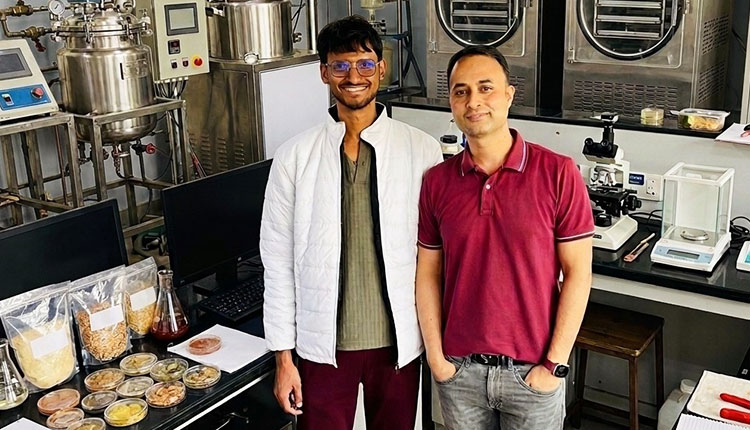
Rourkela: Researchers at the National Institute of Technology (NIT) Rourkela have developed an artificial intelligence-based system capable of rapidly detecting and quantifying adulteration in spices and other food products, offering a faster and more efficient alternative to conventional testing methods.
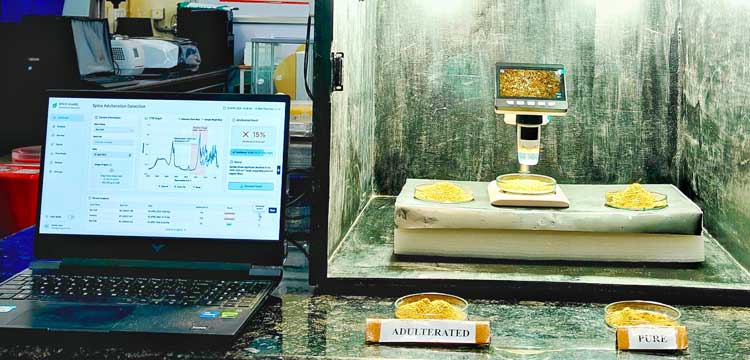
The system combines Fourier Transform Infrared (FTIR) spectroscopy with machine learning algorithms to analyse food samples and identify adulteration levels within seconds. The innovation is aimed at strengthening food safety monitoring, particularly in large-scale industrial and regulatory settings.
Food adulteration continues to be a major concern in India, posing health risks and economic losses. Traditional detection techniques such as chromatography and molecular analysis are accurate but time-consuming, resource-intensive, and unsuitable for routine or rapid screening.
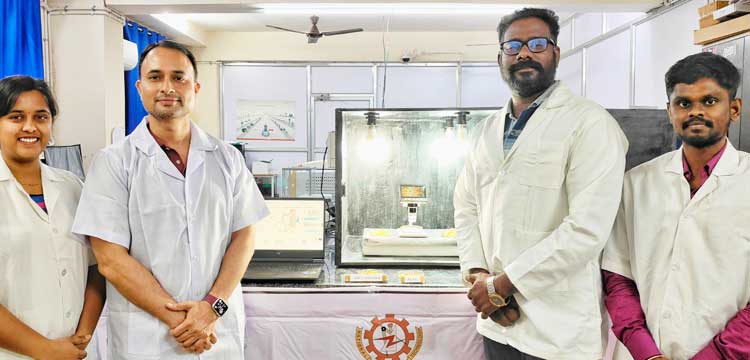
Addressing these challenges, the NIT Rourkela-developed system provides a non-destructive, cost-effective and real-time solution that can be integrated into quality control workflows in food processing units and laboratories.
FTIR spectroscopy works by capturing the infrared absorption patterns of a sample, which are then processed by machine learning models trained to detect complex variations indicating adulteration. Unlike conventional methods that only confirm the presence or absence of adulterants, the new system can also quantify the level of contamination.
According to the researchers, the system has demonstrated around 92 per cent accuracy in detecting adulteration in coriander powder, including the identification of sawdust as a common adulterant. The framework is also adaptable for detecting multiple adulterants across different food products.
The research has been published in the journal Food Chemistry. It was carried out by Prof. Sushil Kumar Singh, Assistant Professor, the late Prof. Poonam Singha, and M.Tech. scholar Rishabh Goyal from the Department of Food Process Engineering, NIT Rourkela.
The team has also been granted a patent titled “Method and System for Detecting and Quantifying Adulteration in Food Stuff (Patent No. 581403; Application No. 202431050538).
Speaking on the development, Prof. Singh said the innovation addresses a critical gap in the food industry by enabling rapid and reliable detection of spice adulteration.
“Our invention focuses on addressing a long-standing challenge in food industry, which is absence of a fast and reliable spice adulteration detection system. We have combined existing rapid detection equipment with novel machine learning approaches to develop an integrated system with effective decision-making capability. This innovation will not only ensure food safety and regulatory compliance but also strengthen consumer trust across the supply chain. I believe this invention holds great potential for the food industry, particularly in the Indian market,” he said.
The researchers noted that the system can be seamlessly deployed in industrial quality control environments without disrupting existing processes. Its scalability and low operational cost make it suitable for both large industries and small and medium enterprises.
Compared to conventional laboratory-based methods, which require extensive manpower, chemicals, and longer processing times, the new system significantly reduces testing time and costs.
As a next step, the research team plans to collaborate with industry partners for pilot-scale testing and real-world validation. They also aim to expand the system’s capabilities to detect adulteration in a wider range of food products.
With rising concerns over food safety, the researchers believe such AI-driven innovations can play a crucial role in improving quality assurance systems and strengthening regulatory enforcement in the food sector.