





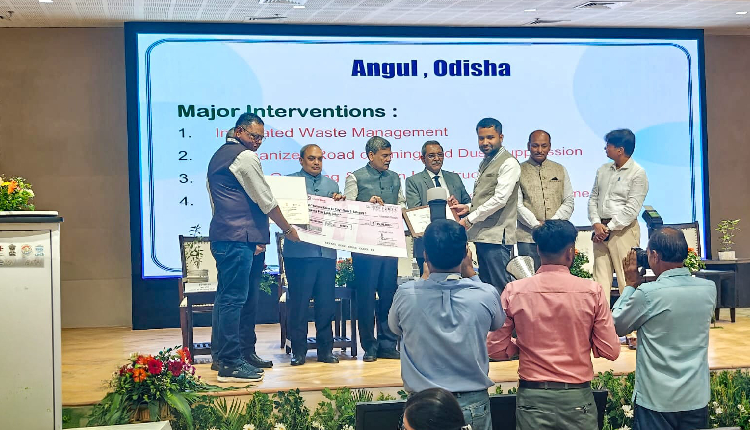
Bhubaneswar: Odisha has achieved a significant milestone in clean-air governance, with its urban centres securing top national positions in the Swachh Vayu Sarvekshan 2026, conducted under the National Clean Air Programme (NCAP). The recognition reflects the State’s sustained efforts to improve ambient air quality through targeted interventions, scientific planning, coordinated implementation and active community participation.
Rourkela Municipal Corporation (RMC) emerged as the national leader in Category II, securing Rank 1. In Category III, Kalinganagar also secured Rank 1 nationally, demonstrating strong performance in air quality management and industrial emission mitigation. Odisha further strengthened its position in Category III, with Angul Municipality securing Rank 2 and Talcher Municipality securing Rank 3 nationally. The achievement underscores Odisha’s focused approach to addressing air pollution challenges, particularly in industrial clusters and airsheds.
The State’s decentralised and community-driven approach to clean-air management also received national recognition at the ward level. Ward No. 36 and Ward No. 30 of Bhubaneswar Municipal Corporation (BMC), along with Ward No. 13 of Rourkela Municipal Corporation, secured top positions in the ward-level clean-air assessment. Their performance highlights the importance of localised planning, citizen participation and sustained implementation of environmental measures at the grassroots level.
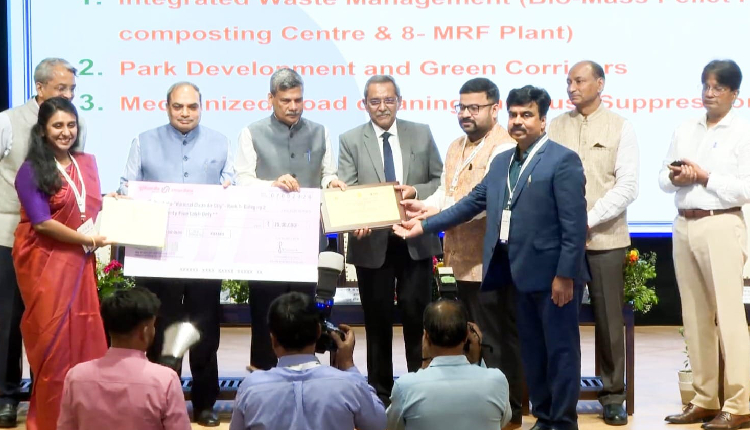
Congratulating the Urban Local Bodies, district administrations, municipal leadership, sanitation teams and citizens, Dr. Krushna Chandra Mahapatra, Minister for Housing & Urban Development, said, “This achievement is not merely a recognition of our efforts, but a renewed responsibility to make clean air a sustained priority in every city and town of Odisha. Our focused interventions in dust suppression, green corridor expansion, scientific waste management and vehicular emission control are delivering tangible results. I congratulate our citizens, municipal leadership and ground-level teams for this remarkable achievement. We must build on this momentum and ensure that every urban centre in Odisha becomes a model of clean-air governance.”
The State Government will continue to strengthen and scale up measures to improve urban air quality, including mechanical sweeping, scientific waste management, the reuse of treated wastewater for dust suppression, green-belt and green-corridor development, improved traffic management, and measures to control vehicular and industrial emissions. Greater convergence among Urban Local Bodies, district administrations and stakeholder agencies will further strengthen the implementation of clean-air initiatives across the State.
The national recognition secured by Odisha’s urban centres is a testament to the collective efforts of municipal bodies, frontline workers, communities and citizens. Building on this achievement, Odisha will continue to pursue a coordinated and outcome-oriented approach to clean-air governance, with the vision of creating cleaner air, healthier communities and sustainable, climate-resilient cities across the State.