





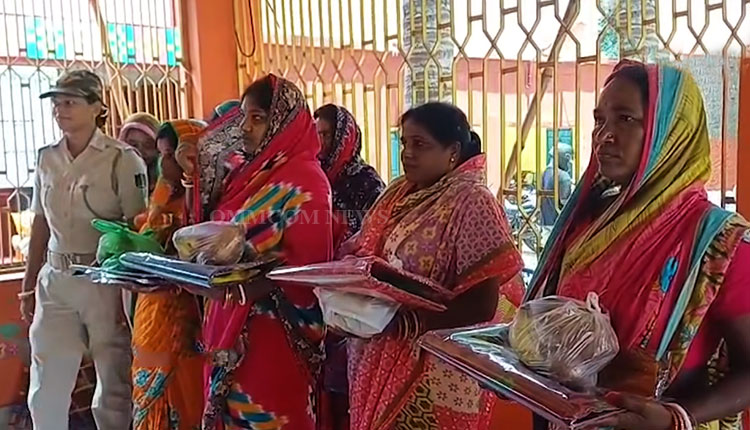
Bhadrak: The premises of Bhadrak District Jail witnessed emotional scenes on Saturday as women of inmates observed Sabitri Brata, praying for the long life and well-being of their husbands lodged in the prison. The ritual was conducted following special arrangements made by the jail authorities.
Several women visited the jail and participated in the traditional observance after the administration facilitated puja arrangements inside the prison premises. Necessary materials for the ritual were provided, and family members were allowed to meet inmates and perform the religious ceremony in a designated area within the jail.
The observance carried a strong emotional undertone, with many women expressing gratitude for being allowed to continue the tradition despite the challenging circumstances of their husbands’ incarceration.
“It is a difficult situation for us, but we are thankful to the jail authorities for allowing us to observe Sabitri Brata. They provided all the puja materials, and we were able to complete the rituals for our husbands,” said one of the women visitors.
Another visitor said the arrangement made the occasion meaningful, especially for families awaiting the release of their loved ones.
“We are grateful for this arrangement. Only a few days are left for my husband’s release, and it feels emotional to perform the puja inside the jail. We thank the authorities for facilitating everything required for the ritual,” she said.
A jail official said the initiative was taken on humanitarian grounds to ensure that inmates and their families are not deprived of cultural and religious practices.
“As part of humanitarian considerations, we allowed the observance of Sabitri Brata inside the jail premises. Family members of inmates were permitted to meet them, and necessary arrangements were made for the puja. Such initiatives ensure that cultural traditions are respected even within the prison environment,” the official said.
He added that similar arrangements are made on select occasions, subject to security protocols, to promote family bonding and enable inmates to remain connected with social and cultural traditions.