





Bhubaneswar: Chief Minister Mohan Charan Majhi on the occasion of Teachers’ Day today advised students not to waste too much time on social media, not to fall prey to propaganda, and to study with determination and dedication.
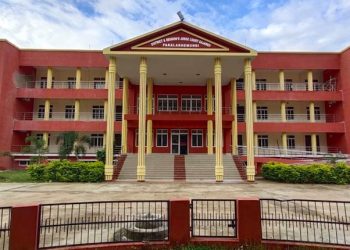
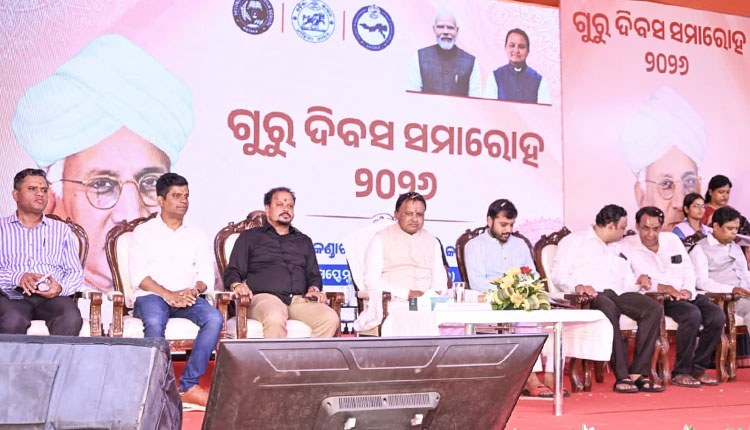
He gave this advice while interacting with students at the Teachers’ Day ceremony held at Secondary Board High School in Kataka, urging them to focus on building their career.
The Chief Minister said that as students, your first responsibility is to study well, acquire skills and contribute to your own and the country’s development. This is the fundamental objective of our education process. Therefore, he told the children to stay away from anything that is likely to hinder their career building.
Similarly, shedding light on the relationship between teachers and students, the Chief Minister said that in today’s time it needs to be more friendly. He also advised them to seek the blessings of parents and teachers to reach the pinnacle of success.
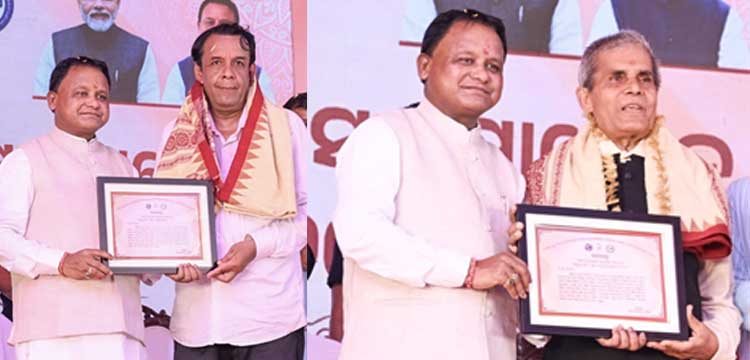
The Chief Minister said that education is not just about imparting knowledge; education is a great process of building human beings and our teachers have been carrying out this great responsibility. Explaining to the children the sanctity of the sacred Guru-Shishya relationship and paying tribute on the sacred birth anniversary of former President of India Dr Sarvepalli Radhakrishnan, the Chief Minister said that in Indian culture the Guru-Shishya tradition is incomparable.
From Lord Shri Ram, Shree Krishna to Chandragupta Maurya and Swami Vivekananda, the role of the Guru was decisive in shaping everyone’s life. Even in today’s era, a great personality like ‘Missile Man’ Dr. A.P.J. Abdul Kalam, despite being in the highest post of the country, considered it a great honour to introduce himself first as a teacher, the Chief Minister said.
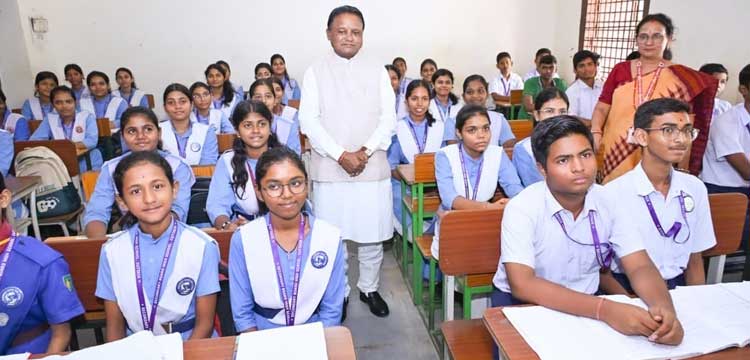
Highlighting the government’s commitment to bring about comprehensive reforms in the state’s education system, the Chief Minister gave important information about the ‘KG to PG’ free education scheme. Odisha has become the first state in India to make education universal and free from Sishu Vatika to Post Graduation.
Apart from this, he reiterated the government’s commitment that 2,200 world-class ‘Godabarish Mishra Adarsha Prathamika Vidyalayas’ are being built at a cost of Rs 12,000 crore and 45,000 Sishu Vatikas have been opened for pre-school children. He also mentioned mid-day meals and supply of textbooks for Class IX and X students, ‘Shaheed Madho Singh Haath Kharcha Yojana’ for tribal children, and filling up of 45,000 teacher posts in the next three years.
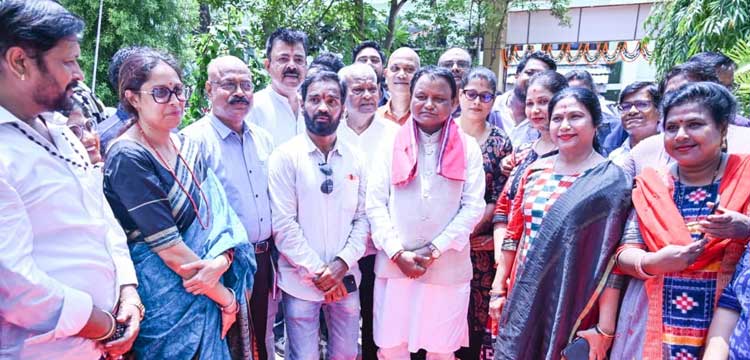
The Chief Minister expressed happiness that under the School and Mass Education Department, old students are being involved through ‘Panchasakha Sikshya Setu’ and integrated transformation of schools is being done.
The Chief Minister further said that this school is proud of its old students like former MLA Lalitendu Bidyadhar Mohapatra and former Finance Minister Panchanan Kanungo. Such personalities are the true identity of an educational institution.
He called for building a strong, prosperous and self-reliant Odisha with the combined cooperation of the profound knowledge of teachers, the talent of students, the experience of alumni and the general public.
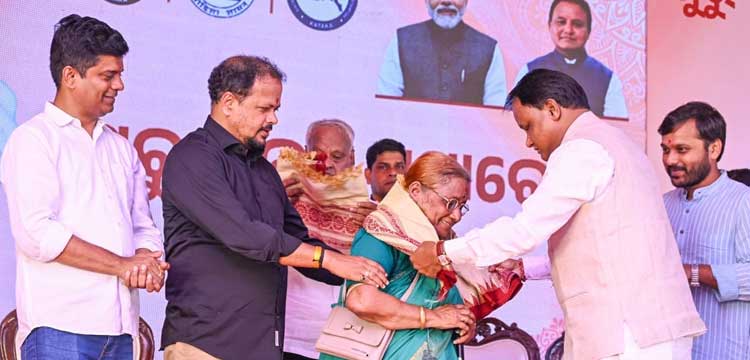
On this occasion, the Chief Minister felicitated and honoured Ashok Kumar Satpathy, Kumudini Jee, Shakuntala Mohanty, Daitari Sahu and Jayanti Majhi, who have rendered dedicated service in teaching and shaping the future of students. The Chief Minister said that these ideal teachers have played a major role in carrying forward the glorious tradition of the school.
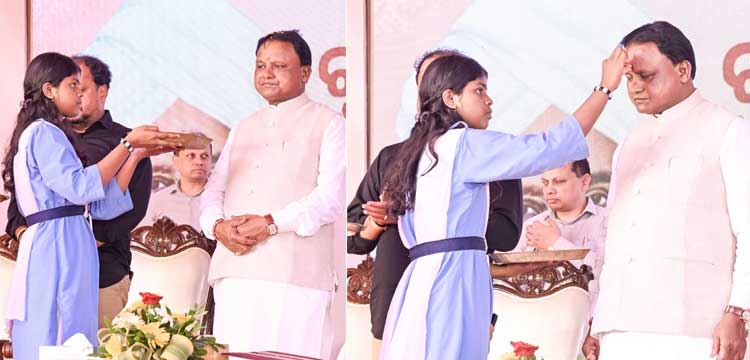
On this occasion, Mahanga MLA Sarada Prasad Pradhan, Kataka Sadar MLA Prakash Chandra Sethi; Choudwar-Cuttack MLA Souvic Biswal; Banki MLA Devi Ranjan Tripathy, Commissioner-cum-Secretary of School and Mass Education Department Dr N Thirumala Naik; Kataka Collector Shinde Dattatraya Bhausaheb, President of Board of Secondary Education Srikant Tarai, Headmaster of Secondary Board School Ashok Kumar Satpathy, teachers, students and alumni of the school were present.