







Rourkela: Researchers at the National Institute of Technology (NIT) Rourkela have developed an innovative smart wound dressing that could significantly reduce infection risk, minimise pain during dressing removal, and promote faster healing.
The new dressing addresses a long-standing issue faced by patients requiring repeated dressing changes, which often lead to discomfort and trauma. The technology has been developed by Prasoon Kumar, Assistant Professor in the Department of Biotechnology and Medical Engineering, NIT Rourkela.
Cotton gauze bandages are widely used in wound care due to their affordability, high absorbency, and ease of use. However, conventional dressings are limited in their ability to prevent infections and often adhere to the wound surface, causing pain and damage to newly formed tissue during removal. This also increases the risk of infection.
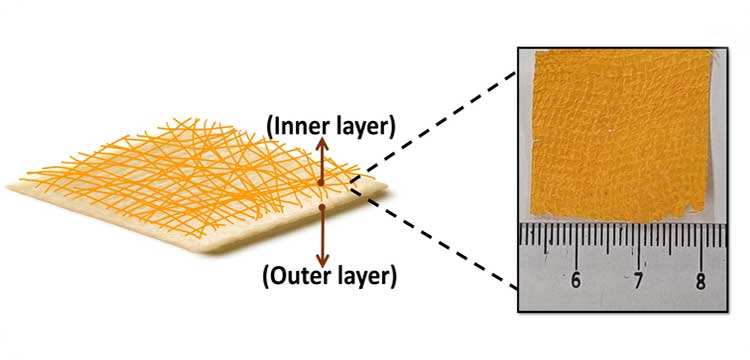
 To overcome these challenges, the NIT Rourkela team has designed a smart cotton gauze dressing by integrating chitosan-coated gauze with an electrospun nanofibrous layer infused with curcumin, a natural compound known for its antimicrobial properties.
Placed between the wound and gauze, the nanofibrous layer acts as a protective barrier, reducing direct adhesion and minimising tissue damage during dressing changes. It also enables sustained drug release, helping maintain a sterile wound environment and reducing the need for frequent dressing replacements and additional medication.
“In laboratory tests, we found that the developed dressing significantly reduces wound adhesion compared to conventional cotton gauze,” said Prasoon Kumar. “The sustained release of curcumin provides antibacterial protection, while the nanofibrous layer supports cell growth and tissue regeneration.”
Key features of the innovation include reduced pain during dressing removal, protection of newly formed tissue, antibacterial activity through sustained curcumin release, improved wound environment, and a simple, scalable, and cost-effective fabrication process.
On cost, Kumar noted that a standard cotton gauze roll (10 cm × 4 m) costs around Rs 30, while the advanced smart bandage of similar size is expected to cost Rs 50–60 at commercial scale.
The research has been published in the journal Emergent Materials and was co-authored by Prasoon Kumar along with Devendra Verma, Earu Banoth, and research scholars Swagatika Barik, Rika Rani Pradhan, Shikha Tripathi, and Samadrita Roy from NIT Rourkela.
The research team now plans to file a patent for the technology and explore industry collaborations for clinical trials and further development.