





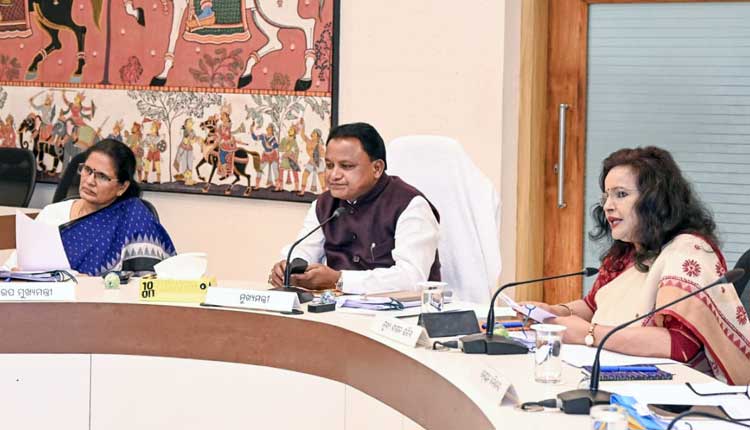
Bhubaneswar: The Odisha Cabinet on Friday approved a proposal to revise the English spellings of 64 place names across 26 districts, in a move aimed at aligning official nomenclature with Odia phonetics and correcting what the government described as distorted colonial-era spellings.
According to an official press briefing by the Revenue & Disaster Management Department, several place names in Odisha continue to be recorded in English forms that do not accurately reflect their original pronunciation in Odia. The government said such discrepancies are inconsistent with linguistic accuracy and affect the state’s cultural identity.
Acting on the direction of Chief Minister Mohan Charan Majhi, district collectors were earlier asked to identify place names where English spellings deviate from their authentic Odia forms. Suggestions were also received from public representatives and citizens across the state.
A high-level committee chaired by noted Odia litterateur Dr. Pratibha Ray was subsequently constituted to examine the proposals. The committee reviewed submissions from districts and placed its recommendations in the public domain for one month to seek public feedback before finalisation.
Following the consultation process, the panel recommended revised English spellings for 64 places, which were approved by the state Cabinet.
The state government will now communicate the decision to the Ministry of Home Affairs for the issuance of a gazette notification. The Centre will be requested to direct all relevant agencies, including the Survey of India, Indian Railways, the Department of Posts, and the Office of the Registrar General & Census Commissioner, to update official records accordingly.
The initiative is intended to preserve and promote Odia linguistic heritage, cultural identity, and historical authenticity.
Among the changes approved are: Angul to Anugola, Pallahara to Palalahada, Talcher to Talacher, Bolangir to Balangir, Bangamunda to Bangomunda, Balasore to Baleshwar, Nilgir to Nilagiri, Soro to Sora, Bargarh to Baragada, Rajborasambar to Rajbodasambar, Bonth to Banta, Boudhgarh to Boudhagada, Cuttack to Katak, Athagarh to Athagada, Salipur to Salepur, Baramba to Badamba, Deogarh to Debagada, Reamal to Riamal, Berhampur to Brahmapur, Hinjilicut to Hinjilikatu, Aska to Asika, Suruda to Sorada, Dasarathpur to Dasharathpur, Dharmasala to Dharmashala, Belpahar to Belpahad, Dharamgarh to Dharmagada, Junagarh to Junagada, Jaipatna to Jayapatna, Lanjigarh to Lanjigada, Bhawanipatna to Bhabanipatana, Khondmal to Kandhamala, Kendrapara to Kendrapada, Aul to Aali, Mahakalapara to Mahakalapada, Keonjhar to Kendujhar, Barbil to Badabil, Keonjhargarh to Kendujhargada, Khurda to Khordha, Bolagarh to Bolagada, Banpur to Banapur, Jatni to Jatani, Jeypore to Jayapur, Podia to Padia, Betnoti to Betanati, Samakhunta to Shamakhunta, Moroda to Morada, Rasgovindpur to Rasagobindapur, Panchpir to Panchapidha, Umerkote to Umarkot, Nayagarh to Nayagada, Daspalla to Dashapalla, Khariar to Khadial, Nimapara to Nimapada, Rairakhol to Redhakhol, Sonepur to Sonpur, Binka to Binika, Sundargarh to Sundaragada, Bonaigarh to Banaigada, Koira to Koida, Lephripara to Lephripada, Subdega to Sabdega, Bargaon to Badagan, Lahunipara to Lahunipada, and Rourkela to Raurkela.
The government described the exercise as part of a broader effort to realign official English spellings with Odia pronunciation and strengthen “Odia Asmita” (identity).