





Bhubaneswar: For generations, core sanitation workers lived with a simple yet painful dream—to return home safely after a day’s work, free from fear, humiliation, and the constant risk to their lives. Every day, they entered hazardous spaces so that cities could function, often without recognition or adequate protection. Their greatest aspiration was not extraordinary; it was to earn an honest livelihood with dignity and provide their children with a better future. Today, that dream is steadily becoming a reality as hazardous manual practices are replaced by mechanised sanitation services, and workers are increasingly recognized as skilled professionals deserving of safety, respect, and social security.
Recognising both the invaluable contribution of sanitation workers and the need to protect their lives, Chief Minister Mohan Charan Majhi has reaffirmed the Government of Odisha’s commitment to strengthening the GARIMA initiative. Building on the strong foundation already laid, the Government continues to expand and reinforce the scheme to ensure that every core sanitation worker benefits from safer working conditions, stronger social protection, improved access to welfare services, and greater opportunities for socio-economic empowerment. Today, GARIMA is not only a flagship initiative but also an evolving commitment to ensuring that the dignity of labour is experienced in everyday life.
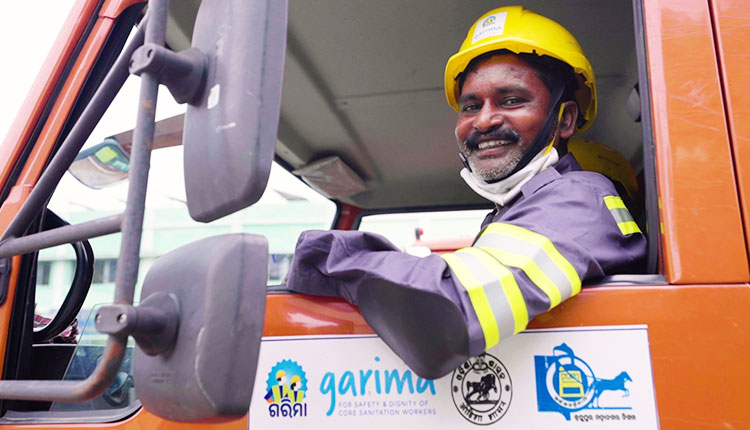
The initiative combines modern technology with institutional reforms to eliminate hazardous manual cleaning practices. Workers are equipped with mechanised sewer and septic tank cleaning machines, along with comprehensive Personal Protective Equipment (PPE), including helmets, gloves, protective masks, safety glasses, and high-durability boots. These measures significantly reduce occupational risks while promoting safe and professional sanitation services.
Beyond workplace safety, GARIMA provides an integrated package of social security measures, including hazard allowances, life and accident insurance, regular health check-ups, identity cards, access to subsidized food security schemes, and housing support under PMAY-U. Dedicated Garima Halls, equipped with clean sanitation facilities and rest areas, have also been established across urban local bodies, recognising the dignity and well-being of sanitation workers. Around 9,364 core sanitation workers have been brought under this protective ecosystem across Odisha.
The impact is best reflected in the journey of Raju Naik, a core sanitation worker from Berhampur Municipal Corporation. Once compelled to manually clean hazardous sewer systems, he now operates mechanised desludging equipment as a trained sanitation professional. His work has become safer, he has earned greater respect, and his family enjoys increased security. According to Raju, access to protective equipment, housing support, improved income, insurance coverage, and regular health services has transformed not only his working life but also the future of his children.
To further strengthen this national movement, the Housing & Urban Development Department, Government of Odisha, will organise the 2nd National GARIMA Conclave in Bhubaneswar on 22–23 August 2026. The conclave will bring together policymakers, urban local bodies, development partners, technology experts, and sanitation workers from across India to exchange experiences, promote complete mechanisation, strengthen worker safety, and advance inclusive sanitation policies. By sharing Odisha’s experience, the conclave seeks to inspire collective action towards a future where no sanitation worker has to risk their life in a manhole, and every worker is assured safety, dignity, and respect.